Plumbing Services Ottawa responds to basement flooding across Ottawa and fixes the plumbing causes behind it, not just the water on the floor.
Emergency response, day or night
Sump system and backwater valve work
Permit, inspection and rebate guidance
Get Help With Basement Flooding
Tell us about your project and we will get back to you within 24 hours.
Active flooding is an emergency – call (343) 326-4111 directly.
Work Out Where the Water Is Coming From First
Where the water appears, and when, usually tells you what failed. Water rising out of the basement floor drain or the laundry standpipe during heavy rain, often with an odour, is the sanitary or storm system surcharging and pushing back into the house because nothing is stopping it. Clear water seeping along the joint where the floor meets the wall during spring thaw or a long rain is groundwater the weeping tile and sump system are not keeping ahead of. Clean water arriving with no weather at all, at any time of year, is a supply-side failure such as a split pipe, a failed water heater tank or a burst washing machine hose. Water pooling under a window well or running in at one corner after a downpour is usually surface water and grading, which is a drainage problem rather than a plumbing one. Getting this right first matters, because the three plumbing causes have three different fixes and none of them substitutes for the others.
Sizing a sump system
Inflow, Lift and the Pit Itself
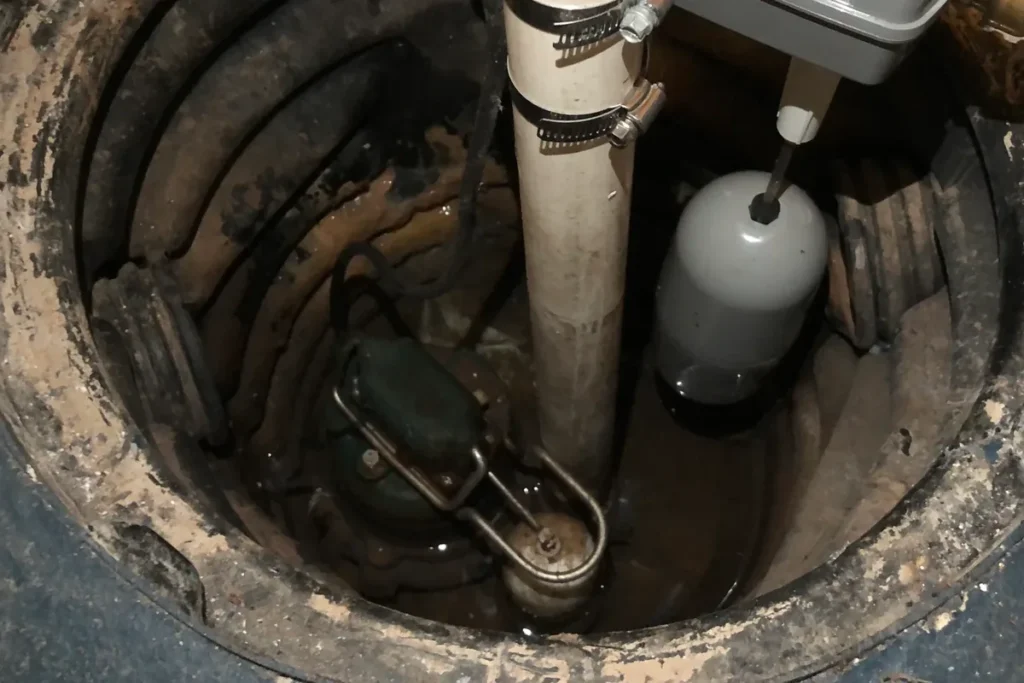
Sizing a sump system is a calculation, not a shelf decision. Start with inflow: during a wet period, with the pump switched off, time how long the pit takes to fill a measured depth, and convert that to litres or gallons per minute. Then work out the total lift the pump has to overcome, which is the vertical height from the pit to the discharge point plus the friction losses along the horizontal run and every elbow in it. Pump ratings are quoted at a given head, and a pump that moves an impressive volume at zero lift moves considerably less at three metres, so the number that matters is the flow at your actual head, with margin above peak inflow. The pit itself is part of the sizing: a wider and deeper pit holds more between cycles, so the pump runs longer and less often instead of short-cycling itself to death, and a tethered float switch needs the width to swing freely where a vertical float does not. Finish with a check valve on the discharge so the column of water in the pipe does not fall straight back into the pit, and consider a backup, because Ottawa’s worst inflow events are storms and ice, and those are exactly when the power goes out.
Where Basement Water Comes From
Three plumbing causes, three different fixes.
Groundwater Through the Weeping Tile
Handled by a correctly sized pit and pump with a working switch. Peaks during spring thaw and prolonged rain, and shows first at the floor and wall joint.
Sewer or Storm Surcharge
Stopped by a backwater valve on the lateral. A sump pump does nothing about this one, which is why homes that flood repeatedly often need both.
Burst or Leaking Pipe
A supply-side failure that arrives regardless of weather. Shut off the water at the main and treat it as an emergency rather than a flooding problem.
The City Rebate, the Permit and the Inspection
For homes built before the backwater valve mandates – storm before January 1, 2004 and sanitary before January 1, 2012 – the City's Residential Protective Plumbing Program is the reason to do this work now rather than eventually. It currently rebates up to $3,000 for a sump pump in a new pit or $1,500 for a pump in an existing pit, and up to $2,500 for an exterior storm backwater valve or $1,000 for an interior sanitary valve, plus the full building permit fee. The mechanics are strict in ways worth knowing before you book anything. It covers new installations, not the replacement of a device already in place. The application has to reach the City within 12 months of the permit date, so the permit starts the clock. Both a backwater valve installation and a new sump pit need a City plumbing permit and an inspection, and the valve has to be installed inside the dwelling and left permanently accessible, which means an inspector has to see it before the concrete goes back over it. We can flag whether a property looks eligible before work starts, but final eligibility is confirmed by the City's program and not by us.
The Flood Protection Check Worth Doing Twice a Year
Ten minutes before storm season and again before the spring thaw.
Test the pump with a bucket
Pour water into the sump pit and confirm the pump starts, clears the pit and shuts off cleanly.
Walk the discharge line
Check the outlet outside is clear, unfrozen and pointing away from the foundation.
Listen for the check valve
It should seat after the pump stops, instead of letting the column of water run straight back into the pit.
Open the valve cover
Check the backwater valve flap and seat are clean and the gate swings freely.
Test the backup
Whether that is a battery, a second pump or a generator connection.
Everyone knows the shut-off
Make sure the whole household knows where the main water shut-off is, and that it actually closes.
When a pit is filling faster than one pump can empty it, a bigger pump is not automatically the answer. Beyond a point, more pump on the same discharge line simply raises the friction losses and buys less than the rating suggests, and it cycles harder against a pit that is too small to buffer it. The alternatives are usually a larger pit, a second pump set to a higher switch level so it only joins in during peak inflow, or a discharge line sized properly for the flow it is being asked to carry. On properties where the weeping tile is genuinely overwhelmed every thaw, the honest conversation is about the water arriving at the foundation in the first place, which is grading, downspouts and drainage rather than plumbing.
Where Sump Discharge Goes Wrong
A correctly sized pump on a badly routed discharge line still floods the basement.
Discharging Too Close to the House
Water dumped beside the foundation runs back down to the weeping tile and returns to the pit. The outlet needs distance and positive grade away from the wall.
An Outlet That Freezes Shut
A discharge that ends in a low spot, a snowbank or a long uninsulated run can ice over. When the pump then runs against a closed pipe, the water comes back inside.
No Check Valve and No Backup
Without a check valve the pipe drains back into the pit and the pump short-cycles. Without backup power, the pump is offline during the exact storm that needed it.
If Water Is Rising Right Now
If water is rising right now, deal with safety before diagnosis. Do not walk into standing water where outlets, cords, a furnace or an electrical panel are submerged or wet. Cut power to the affected area only if you can reach the panel safely and dry, stop using water anywhere in the house so nothing more is added to a line that may already be surcharged, and photograph the water level and the damage before anything is moved, because that record is what an insurer will ask for. Basement flooding is typically not covered under a standard home policy without a specific sewer backup or overland water endorsement, so check what you actually hold rather than assuming – that conversation with your insurer is separate from, and does not delay, the plumbing repair. For an active flood, our emergency plumbing help in Ottawa is dispatched around the clock, and once the water is under control the conversation turns to which of the three causes it was and what stops it happening again.
Once the Water Is Out, Order Matters
Keep the plumbing repair and the restoration separate, and do them in that order.
Plumbing Fix First
There is no sense closing a wall over a problem that has not been solved, and permit and inspection work on a valve or a new pit has to happen before anything is covered.
Then Strip What Held Water
The lower section of drywall and any wet batt insulation generally come out, since both hold water against the framing long after the floor looks dry.
Sewage Is Not Groundwater
Where a backup carried sewage rather than clean groundwater, the affected materials are treated accordingly rather than dried out and reused.
Why Plumbing Services Ottawa for Basement Flooding
Stopping the water is the first job. Stopping the next one is the real job.
24/7 emergency dispatch
Active flooding gets a response day or night, weekends and holidays included, rather than a form reply the next business morning.
Diagnosis before hardware
We establish whether it was groundwater, a surcharge or a supply failure before quoting equipment, because the wrong fix leaves the real cause in place.
Sump systems sized to measured inflow
Pit, pump, head, switch, check valve and discharge routing worked out from your basement rather than from a box on a shelf.
Permits, inspection and rebate guidance
Backwater valve and new sump pit work permitted and inspected, with the City rebate paperwork kept in a shape you can actually submit.
Basement Flooding FAQs
How do I tell what caused my basement to flood?
By where the water appeared and when. Coming up out of the floor drain during heavy rain, often with an odour, points to a sewer surcharge. Seeping along the floor and wall joint during thaw or long rain points to groundwater and the sump system. Clean water with no weather involved is a supply pipe, a water heater or a hose. Water at one window well after a downpour is usually surface grading rather than plumbing.
Is a sump pump enough on its own?
It handles groundwater arriving through the weeping tile, and nothing else. It does not stop the municipal sanitary or storm system pushing back up your lateral during a surcharge, which is what a backwater valve is for. Homes that have flooded more than once usually need both, and the City's rebate program is structured around funding both devices rather than one.
How is a sump pump sized properly?
By measuring how fast the pit fills during a wet period, then choosing a pump that delivers more than that flow at your actual total lift – the vertical height to the discharge plus friction through the run and its elbows. Pit width and depth matter too, since a larger pit means longer, less frequent cycles and a longer pump life. A pump chosen only on horsepower is a guess.
How much can the City rebate toward this work?
The Residential Protective Plumbing Program currently rebates up to $3,000 for a sump pump in a new pit or $1,500 in an existing pit, and up to $2,500 for an exterior storm backwater valve or $1,000 for an interior sanitary valve, plus the building permit fee. It applies to new installations rather than replacements, and the application must reach the City within 12 months of the permit date. Confirm current amounts and eligibility with the City directly.
Do these installations need a permit?
Yes. A backwater valve installation and a new sump pit both require a City plumbing permit and an inspection. The valve also has to sit inside the dwelling and remain accessible, which means the inspector needs to see it before it is covered. Unpermitted work cannot be inspected after the concrete is back, and it cannot be submitted for the rebate, which is where most of the value sits.
Does home insurance cover a flooded basement?
Typically not under a standard policy. Sewer backup and overland water are usually separate endorsements that have to be added, and coverage terms vary between insurers. Check what you actually hold rather than assuming, and photograph the water level and the damage before anything is moved. That conversation runs in parallel with the plumbing repair and should not delay it.
Related Flood Protection Services
Sump Pump Installation & Repair in Ottawa
Sump pump installation and repair in Ottawa – new pits, pump replacement, backup systems and guidance on the City's flood-protection rebate. Permit-compliant.
Backwater valve installation in Ottawa, permitted and inspected, fitted inside the dwelling and left accessible – with City rebate guidance before work starts.
Sewer lateral repair and replacement in Ottawa, camera-diagnosed before any digging – cast iron, clay and modern piping, commercial and residential properties.
24/7 emergency plumber in Ottawa for burst pipes, sewage backups, failed sump pumps and no hot water. Written quotes before repair work starts. Call anytime.
To provide the best experiences, we use technologies like cookies to store and/or access device information. Consenting to these technologies will allow us to process data such as browsing behaviour or unique IDs on this site. Not consenting or withdrawing consent, may adversely affect certain features and functions.
Functional
Always active
The technical storage or access is strictly necessary for the legitimate purpose of enabling the use of a specific service explicitly requested by the subscriber or user, or for the sole purpose of carrying out the transmission of a communication over an electronic communications network.
Preferences
The technical storage or access is necessary for the legitimate purpose of storing preferences that are not requested by the subscriber or user.
Statistics
The technical storage or access that is used exclusively for statistical purposes.The technical storage or access that is used exclusively for anonymous statistical purposes. Without a subpoena, voluntary compliance on the part of your Internet Service Provider, or additional records from a third party, information stored or retrieved for this purpose alone cannot usually be used to identify you.
Marketing
The technical storage or access is required to create user profiles to send advertising, or to track the user on a website or across several websites for similar marketing purposes.