Recent Project in Stittsville
A toilet installed in an accessible commercial washroom in Stittsville, set between the grab bars and connected and tested before the washroom reopened.
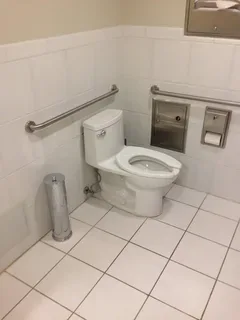
A toilet installed in an accessible commercial washroom in Stittsville, set between the grab bars and connected and tested before the washroom reopened.
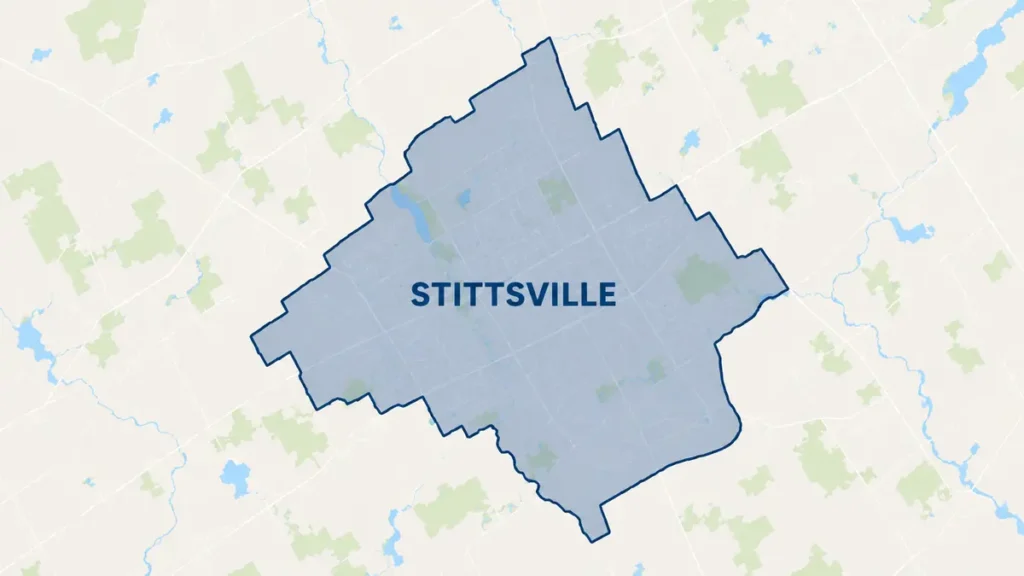
Stittsville has a plumbing history that most Ottawa suburbs do not: a large share of its older properties ran on a private well and septic system before municipal water and sewer reached them, and the switch is still visible in basements along Main Street and the older streets around it. Beyond the village core the community has grown enormously through Amberwood, Wyldewood, Poole Creek, Fairwinds and Jackson Trails, so it now spans everything from original village lots to houses finished in the last couple of years. Which era a property comes from, and whether it was always on municipal service or converted onto it, decides most of what a service call there involves.
When a property gets connected to municipal service, the water line from the street is brand new and so is the sanitary connection, but the distribution inside the house is whatever was already there. What turns up routinely in converted Stittsville homes is a pressure tank left in place but bypassed, a jet pump or submersible controller still wired to an unlabelled breaker, a sediment or iron filter housing plumbed into a line that no longer needs one, and a water softener installed years earlier to deal with well hardness. Ottawa’s municipal water is soft. On a converted property that softener is usually consuming salt, adding two more joints that can leak, and solving nothing.
Still standing in the corner, sometimes still wired. Worth removing properly rather than leaving live equipment connected to nothing.
Sized for well hardness, now sitting on soft city water. On most converted homes it can come out along with its bypass and drain line.
An abandoned well needs proper decommissioning and a disused tank needs pumping and filling or removal. Both belong on a buyer's list.
None of it is strictly plumbing work, but all of it surfaces during work on a Stittsville property and all of it belongs in a pre-purchase conversation.
A well that is no longer in use needs to be decommissioned properly rather than capped and forgotten.
An old tank left in the ground stays a hazard until it has been pumped and filled or taken out.
It often reads as a soft, slow-draining patch of yard, which is useful to know before anyone routes a sump discharge across it.
Inside a village-core house the drainage can be small diameter and shallow, laid out back when the household was deliberately keeping water out of a tank.
The newer half of Stittsville is an entirely different job. Fairwinds, Jackson Trails and the phases built after the City's requirements came into force arrived with PEX supply, a CSA-approved backwater valve on the sanitary line and a sump pit with a pump already in it. Nothing there needs installing. What it needs is verifying, because a valve nobody has opened since the builder closed the cover and a pump nobody has pour-tested are protection on paper only. The other thing worth checking on those streets is the sump discharge route. It has to fall continuously from the wall and terminate clear of the foundation, because a line that finishes flat holds water and freezes solid through a Stittsville January.
The oldest stock, much of it converted from well and septic. Older interior distribution, small-diameter drains, and no backwater valve unless retrofitted.
Established 1980s and 1990s streets with mature landscaping, irrigation systems needing backflow protection, and supply piping now middle-aged.
Current-code construction. PEX, a backwater valve and a sump pit from the builder, all of it waiting for someone to actually test it.
West and south of the built-up area, out toward Ashton, Munster and the Richmond side, properties remain on private wells and septic and will stay that way. Those are genuine well calls: pump and pressure tank sizing, short cycling from a waterlogged tank, pressure switch and check valve failures, sediment carry-over, and real hardness or iron where the local groundwater carries it. Treatment equipment belongs on those addresses, and on a converted village property it generally does not. Telling the two apart before quoting is the first step, because one symptom, weak pressure at the fixtures, means a failing pump on one address and a corroded supply branch on the other, and pricing them the same way helps nobody.
Commercially, Stittsville splits along the same line the housing does.
Restaurants and professional offices in older buildings where the plumbing has been added to over time rather than designed in one go.
Newer retail, food service and clinics, which means grease interceptors on a service schedule and backflow prevention on anything with a boiler or a commercial dishwasher.
Mature landscaping puts irrigation backflow protection on the residential side of the community as well as on the commercial side.
For a Stittsville homeowner the practical checklist depends on which house you own. In the village core: establish whether you are on municipal service or still on a well, find out what the leftover equipment in the basement is actually connected to, and have the supply piping assessed rather than assumed, because a brand new line from the street does nothing for a corroded run inside a wall. In the newer phases: pour-test the sump, lift the backwater valve cover and look at the flapper, and confirm the discharge falls away properly before the first freeze. On a rural lot outside the serviced boundary: know the age of the pump, watch the pressure tank for short cycling, and treat any sudden change in water clarity as worth investigating rather than waiting out.
Municipal, converted or still on a well changes the diagnosis, the parts and the price. That gets established before anything is quoted.
If the softener and pressure tank in your converted village home are doing nothing, we will say so rather than quote you a service on them.
For the properties past the serviced boundary, pumps, pressure tanks, switches and sediment are day-to-day work rather than an exception.
In Fairwinds and Jackson Trails the valve and pump are already installed. We test them, which is a different and more useful service.
On municipal service, almost certainly not. Ottawa city water is soft, and a softener that was sized for well hardness is now using salt and adding connections without improving anything. Removing it and reconnecting the supply directly is usually straightforward. The exception is if the unit is also doing something else in the chain, so we look at how it is actually plumbed before recommending removal rather than assuming.
The clearest signs are a water meter and a City water bill, and the absence of a pressure tank in active use. Converted properties confuse this because the old equipment often stays in place. We trace the incoming line from where it enters the foundation and confirm what is live and what is bypassed, which also tells you whether a redundant pump is still wired to a breaker.
An abandoned well should be decommissioned properly rather than left capped, because an open borehole is a direct route into groundwater. A disused septic tank should be pumped and either filled or removed so it cannot collapse. Neither is plumbing work in the narrow sense, but both matter on a Stittsville property and both are worth resolving and documenting before the house changes hands.
No, it will already have one. A CSA-approved valve has been mandatory on new builds since 2004 for storm service and 2012 for sanitary, and those phases are well inside that window. What those homes need is verification: opening the access cover to confirm the flapper is clear and moves freely, and keeping that cover reachable when the basement gets finished. The same goes for the sump pump, which should be pour-tested rather than assumed to work.
Yes. Properties toward Ashton, Munster and the Richmond side are on private wells and septic, and those calls cover submersible and jet pumps, pressure tanks, pressure switches, check valves and sediment issues. Short cycling is the most common complaint and usually traces to a waterlogged pressure tank rather than the pump itself, which is a much smaller repair than most owners expect.
Yes, more so here than in a newer phase. A village-core property may have converted servicing, leftover equipment, small-diameter septic-era drainage, original supply piping and no backwater valve, and none of that shows in a listing. A camera on the lateral and a look at the supply and the leftovers gives you a repair list with real numbers on it before you commit rather than after.