Recent Project in Manotick
A two-piece toilet installed in a Manotick bathroom, set level on the floor, connected to the supply and checked for leaks at the base and tank.
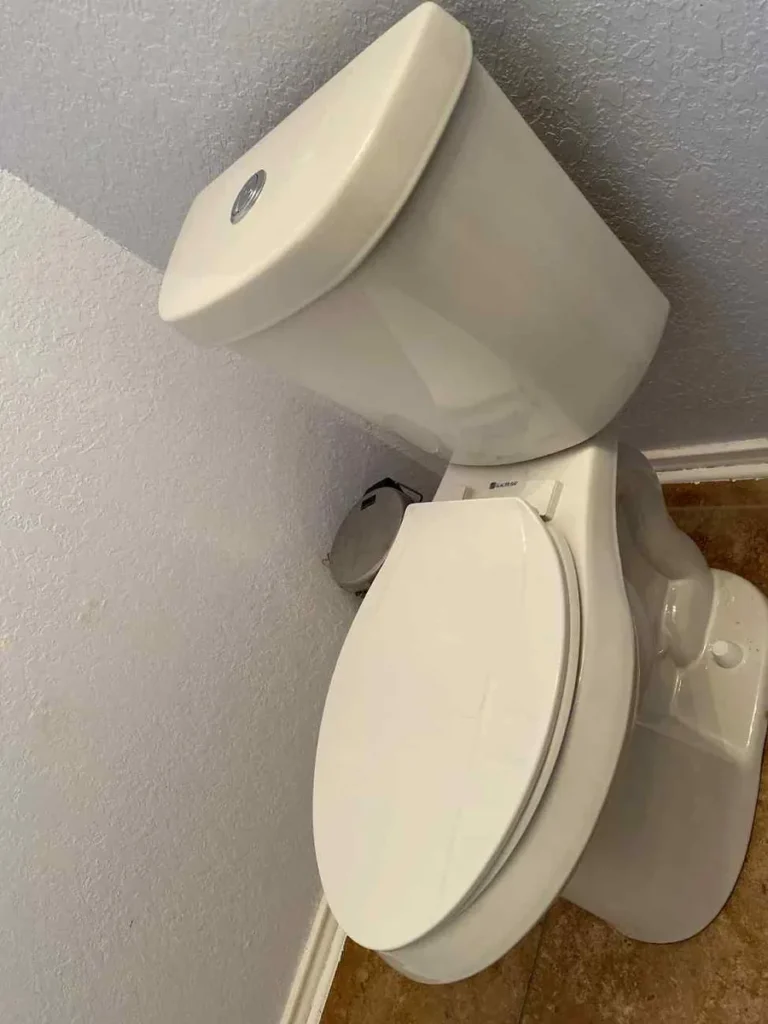
A two-piece toilet installed in a Manotick bathroom, set level on the floor, connected to the supply and checked for leaks at the base and tank.
The single biggest factor in Manotick plumbing is how close the ground water sits to the basement floor. The village is built around the Rideau River at Watson's Mill, Long Island sits between the river and the canal cut, and a great many properties here are within a short walk of open water. That means the water table under them is high most of the year rather than only during a spring melt, and it does not need a storm to become a problem. Basements that would be dry in a west-end subdivision are working basements here, and the sump system is not a seasonal appliance in Manotick. It is a permanently running part of the house.

A pit that cycles constantly wears out on a shorter clock than one that runs a few weeks a year. It also makes the failure consequences worse: when the pump on a low-lying river-adjacent property stops, the water arrives immediately rather than eventually. That is why battery backup matters more here than almost anywhere else in the city, because the weather that raises the river and saturates the ground is the same weather that takes the power out. The other half of the system is the discharge, which has to leave the wall with continuous fall and terminate somewhere the water will actually drain away from, rather than into ground that is already at capacity.
Near-continuous cycling ages a pump and a float far faster than seasonal duty. Testing on a schedule matters more here than in a dry suburb.
The storm that raises the river is the storm that cuts the power. A primary pump with no battery backup is a pump that stops when it is needed.
Saturated ground pushes against the foundation year-round, so weeping tile and the pit take a constant load rather than an occasional one.
Servicing in Manotick is not uniform, and getting it right is the first step on any quote. The village core is on a municipal system, while a great many properties immediately outside it draw from a private well and discharge to a septic system on their own lot. On the well properties, hardness, iron and sulphur are legitimate concerns rather than imagined ones, because that water comes out of local bedrock rather than a treated municipal supply. Orange staining in a toilet bowl or tub, a metallic taste, sediment collecting in an aerator or a rotten-egg smell on the hot side are all worth investigating on a Manotick well, and the treatment that fits depends on what the water actually contains.
A private well brings its own hardware, and a septic system changes the drain side just as much.
A submersible or jet pump, a pressure tank, a pressure switch and a check valve all have to work together, so a fault in one shows up as a symptom that looks like another.
The most common complaint we hear, a pump kicking on and off every few seconds, is usually a waterlogged pressure tank rather than a failing pump. That is a far smaller repair than most owners fear.
Chemical drain cleaners, wipes, grease and heavy solids all cause more damage in a tank and field than they do in a municipal lateral.
Clearing a blocked line on a septic property means knowing where the tank sits and what condition it is in before the work starts.
Older homes and small commercial around Bridge Street and Main Street on municipal servicing, with drainage added to over decades.
The highest groundwater in the area. Working sump systems, seepage points, boathouses and long service runs across the lot.
Private well and septic. Pump and pressure tank work, iron and hardness treatment, and drain care that respects the tank and field.
Waterfront and rural Manotick properties add a winter list the suburbs do not have. Long runs of supply between an outbuilding, a boathouse or a well head and the main house are exposed in ways an urban service line is not, and any part of that run above frost is a freeze candidate every January. Properties used seasonally need proper winterizing rather than just a closed valve: the system drained down, traps protected and the water heater dealt with. There is also a cross-connection question that only comes up near water, because irrigation drawn from the river must never have a path back into the potable system. Backflow protection on that connection is not optional and is worth confirming rather than assuming.
The shops and offices around Bridge Street and Main Street sit in buildings where the plumbing has been extended and altered over many years rather than designed in one pass, so the first job is often working out what actually connects to what.
Shops, professional offices and small plazas in older buildings, where an accurate picture of what connects to what is worth more than any amount of guesswork.
A grease interceptor on a service schedule instead of an emergency call, plus testing and a report on any backflow assembly serving a boiler or a commercial dishwasher.
Operations on their own well and septic add pump and tank capacity questions on top of everything a serviced building has to deal with.
What a Manotick owner should actually watch for splits the same way the servicing does. On a river-adjacent property: how often the pump cycles and whether that has changed, whether the discharge is still falling away cleanly, damp or efflorescence appearing at the base of a wall, and whether there is any backup power at all. On a well property: short cycling at the pump, a drop in pressure or yield through a dry summer, new staining or a change in taste or clarity, and the age of the pressure tank. On any Manotick property: a water bill or meter reading that has moved without an explanation, because a slow leak in a buried service run across a large lot can go a long time unnoticed and shows up in the ground long before it shows up in the house.
Pumps, pressure tanks, switches, iron and hardness on private wells, and drain work that accounts for a tank and field rather than a city sewer.
On a river-adjacent lot the pit runs most of the year. We size, test and back up the system for that reality, not for occasional use.
River-drawn irrigation and outbuilding supply get checked for backflow protection, because a cross-connection near open water is a real risk.
Large lots hide leaks. Locating a buried supply leak before excavating anything is cheaper than opening the driveway to look.
Near the Rideau River the water table sits high through most of the year, so the weeping tile keeps feeding the pit whether or not it has rained. Frequent cycling is normal on a low-lying lot here, but it wears the pump and float far faster than seasonal duty would. If the cycling has recently got worse without a weather change, check for a failed check valve letting the discharge column drop back into the pit and effectively pumping the same water twice.
On a river-adjacent or low-lying property it is the most useful money in the system. The storms that saturate the ground here are the same ones that knock the power out, and a primary pump does nothing without electricity. On a lot where groundwater arrives quickly, the gap between an outage and water on the floor is short. If the basement is finished or the pit runs year-round, treat backup power as part of the system rather than an upgrade.
The village core is on a municipal system, while many properties outside it draw from a private well and discharge to a septic system. The presence of a pressure tank and pump in the basement, and the absence of a water meter, is the quickest indication. We confirm it at the point the supply enters the foundation before quoting, because a well property and a serviced property need different parts, different diagnosis and different pricing.
Usually iron. Groundwater in this area can carry dissolved iron that oxidises on contact with air, which is why staining appears in a toilet bowl or a tub rather than in the glass. A rotten-egg smell points instead at sulphur, and it often shows up on the hot side first. Both are treatable, but the right equipment depends on what the water actually contains, so testing comes before anyone recommends a system.
Yes, with the tank taken into account. On a septic system the blockage may be in the house drain, in the line to the tank, or a symptom of a tank that is full or a field that is failing, and those need different responses. We locate the tank and establish its condition before deciding on a method, and we will tell you plainly if the problem is the septic system rather than the plumbing, because clearing a line into a full tank fixes nothing.
Closing the main valve is not enough on its own. The system needs draining down so nothing is left standing in a supply line, traps need protecting so they do not freeze and crack, and the water heater has to be dealt with rather than left full and cold. Outbuildings, boathouses and any exposed run between them and the house need the same treatment, since those are the sections furthest from any heat.