Recent Project in Nepean
A toilet repair in a Nepean bathroom, with the tank lid off and the internal parts being replaced on site by our plumber.

A toilet repair in a Nepean bathroom, with the tank lid off and the internal parts being replaced on site by our plumber.
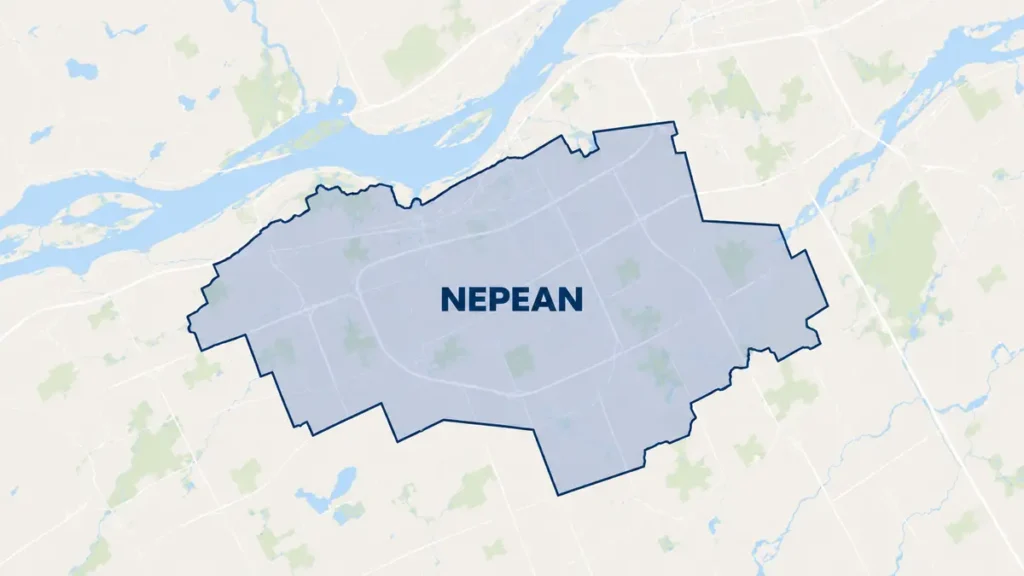
If your Nepean home went up between the early 1950s and the late 1970s, the two things most likely to bring a plumber to the door are the supply piping inside the walls and tree roots in the sewer lateral outside. Nepean was Ottawa's large postwar expansion, and City View, Bells Corners, Manordale, Craig Henry, Arlington Woods and later Centrepointe were laid out across three decades of it. Nothing about how those houses were plumbed was unusual for the time. It is simply at the end of a service life now. Nepean amalgamated into the City of Ottawa in 2001, so permit, inspection and rebate rules are identical here to anywhere else in the city, which matters once flood protection comes up.
The zinc coating goes first, then rust builds on the pipe wall and narrows the bore until an upstairs shower drops to a trickle every time a tap runs on the main floor. The familiar signs in an older Nepean home are rusty or brown water on the first draw after the house has sat quiet overnight, hot side pressure noticeably worse than cold because heat speeds the process up, and pinhole leaks appearing at threaded joints where the wall is thinnest. Replacing one failed section rarely buys much time, because the rest of the run is the same age in the same condition. The real question is whether to repipe in stages or all at once.
Rust narrows the bore from the inside. Brown first-draw water, weak hot side pressure and pinholes at threaded joints all point the same direction.
Seventy years of tree canopy over generous postwar lots. Roots find any gap at a joint and fan out into a mass that catches everything passing.
The oldest Nepean homes still have iron stacks that corrode from the bottom up and eventually channel out along the invert.
Outside the house, Nepean's mature tree canopy is the other half of the story. Seven decades of growth on wide postwar lots has put substantial root systems directly over the sewer laterals, and roots travel toward water. A hairline gap at a joint on an older clay or early plastic lateral is all one needs, and once inside it fans into a mass that catches paper, grease and everything else moving past. The symptom is several fixtures draining slowly at once and a main line that backs up on roughly the same schedule each year. Cutting the roots out restores flow, but the entry point is still there, so a camera run afterward decides whether the line needs lining, a spot repair, or a maintenance cut on a known interval.
Nepean is entirely on City of Ottawa water and Ottawa's supply is soft, so nothing here calls for a softener no matter how rough the water looks coming out of a corroded line. That discolouration is the pipe, not the water.
The oldest homes still carry cast iron stacks alongside early ABS or clay laterals that are past a normal design life, which is a replacement conversation rather than a cleaning one.
On a line thick with grease and root fibre a jet scours the full pipe wall, while a cable cores a channel through the middle of the blockage and leaves the rest of it in place.
Nepean does not merely predate the City's backwater valve requirement, it predates it wholesale, so the great majority of the suburb carries no valve on the sanitary lateral at all. That matters because the pipe from the property line inward is the owner's rather than the City's, and that section sits outside most standard home insurance. Ottawa's Residential Protective Plumbing Program was written for precisely this housing stock: it puts money back toward a valve, or toward a sump pump in a new pit, and covers the permit fee on eligible older homes. Permits and inspection apply either way, the valve has to stay inside the dwelling and reachable once it is in, and the City decides who qualifies.
Oil and sediment interceptors, trench and floor drains taking far more than domestic waste, and backflow assemblies on wash bay supply.
Kitchens that have run for decades in the same building. Grease interceptor service, aging waste branches and high-use public washrooms.
Shop washrooms, service sinks, process connections and floor drains in buildings behind the Merivale strip that cannot lose a working day.
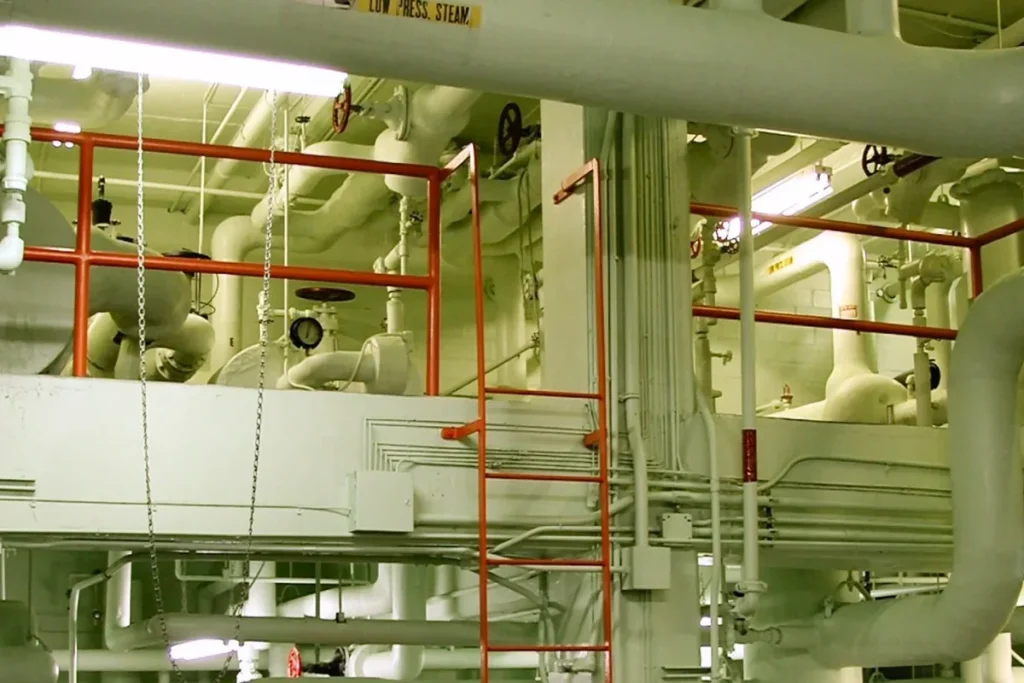
Merivale Road carries a plumbing load unlike the retail plazas in Ottawa’s newer suburbs. There are big-format stores, but there are also restaurants that have operated in the same building for decades, auto repair, tire and body shops, and the light industrial blocks sitting behind the strip along Colonnade Road and Slack Road. That mix means oil and sediment interceptors as well as grease interceptors, floor and trench drains handling more than domestic waste, and backflow prevention assemblies on buildings with boilers, wash bays and irrigation systems. Robertson Road through Bells Corners adds a second older commercial strip, and those properties get the same diagnosis and scheduling discipline as the houses around them.
For a Nepean homeowner the useful signals are cumulative rather than sudden. Water that runs brown for a few seconds each morning, a shower that loses pressure the moment the dishwasher fills, a main shutoff valve that has not been turned in thirty years and may well refuse to close on the night you need it, a stack that sweats or stains where it passes through the basement ceiling, and a main drain that backs up every spring are each worth attention on their own. Taken together they describe a house that needs a plan rather than another patch. Staging a repipe across two or three visits, or combining a lateral repair with a backwater valve in a single excavation, both cost considerably less than treating each failure as its own emergency.
The sequence we use in Nepean reflects that. Supply complaints get traced to whether the restriction is one branch, one floor or the whole system, because those are three different quotes and only one of them is a full repipe. Drain complaints get a camera before a price, since roots, a collapsed clay section and simple grease all produce the same slow drain at the fixture and none of them cost the same to fix. Anything opening the ground gets checked for whether flood protection should go in at the same time. Written quotes come from what the diagnosis found, and permit-bearing work is inspected properly so it holds up when the house is eventually sold.
We establish whether the restriction is one branch or the whole system before quoting, and we will tell you when staging the work makes more sense than doing it all at once.
Cutting roots restores flow for a season. A camera tells you where they got in, which is the difference between an annual bill and a permanent fix.
A main valve untouched for decades often fails when it is finally turned. We plan for that rather than discovering it mid-repair.
Oil and grease interceptors, shop floor drains and backflow testing for auto, restaurant and light industrial buildings along the strip.
Look at the exposed pipe in the basement near the meter. Galvanized is dull grey steel with threaded fittings and it sounds solid rather than ringing when tapped, where copper is reddish with soldered joints. A magnet sticks to galvanized and not to copper. The other clue is behavioural: brown first-draw water, weak flow upstairs, and hot side pressure worse than cold. We confirm it at the shutoff and at a couple of fixture stops.
Urgency is set by symptoms, not by the calendar. Brown water on the first draw of the day and a hot side that has lost noticeably more pressure than the cold side mean the internal corrosion is already well advanced. Once pinholes start appearing at threaded joints, they tend to keep appearing, because every joint on that run is the same age and has seen the same water. Bells Corners and Craig Henry streets from the same build years usually reach that point together, so a neighbour's failure is a reasonable forecast for your own.
That pattern almost always means roots. They grow into a gap at a joint, thicken over the season, and reach blocking size at roughly the same point each year. Nepean's postwar tree canopy sits directly over a lot of these laterals. Clearing restores flow, but the camera afterward is what matters, because it shows the entry point and tells you whether lining, a spot repair or a scheduled maintenance cut is the sensible answer.
No. Nepean is on City of Ottawa municipal water, which is soft. If your water looks rusty or leaves sediment in an older Nepean home, that is corrosion inside galvanized supply pipe, not mineral content in the supply. A softener will not fix it and will add maintenance you do not need. Replacing the affected piping is what actually clears the water.
It is worth pricing, because postwar Nepean was built long before valves were required and the pipe you would be protecting is the one you own. Ottawa's protective plumbing rebate program contributes toward the valve and the permit fee on eligible older homes, and the same excavation can often cover a lateral repair at the same time, which is cheaper than two separate digs. The work is permitted and inspected, and the City decides eligibility.
Yes. The corridor and the Colonnade and Slack Road blocks behind it run to auto shops, restaurants and light industrial units, which means oil and sediment interceptors, grease interceptors, trench and floor drains, service sinks and backflow prevention assemblies needing testing and a report. Work in an operating business gets scheduled around trading hours, with the isolation and restoration planned rather than improvised.