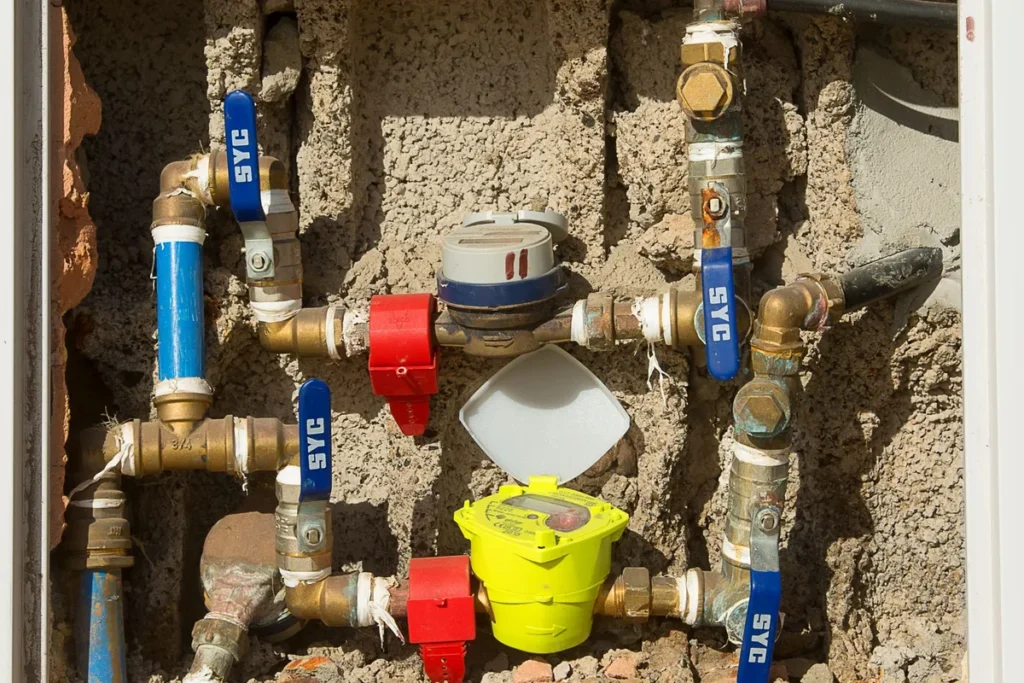
Plumbing Services Ottawa installs and tests backflow preventers on commercial, multi-unit and irrigation connections across Ottawa.
Installation and testing
Cross-connection survey
Documentation for your file
Get a Backflow Testing Quote
Tell us about your project and we will get back to you within 24 hours.
Your information is secure and never shared.
Where Backflow Risk Actually Comes From
Backflow is drinking water travelling the wrong way through a pipe, and it happens for two distinct reasons. Backsiphonage is a pressure drop on the supply side – a water main break down the street, a hydrant opened for fire flow, a large draw somewhere upstream – which briefly turns your service line into a straw and pulls whatever is sitting at the far end of a connected fixture back toward the building. Backpressure is the opposite: something inside the building pushes harder than the city supply, typically a boiler, a booster pump, a pressurised tank or a chemical injection system, and forces its contents back into the potable line. A backflow preventer is the mechanical stop between the two, and it is required wherever the potable system touches something you would never want to drink.
Cross-connections
The Connections That Carry Real Risk
The connections that carry real risk are rarely the ones people expect. Irrigation is the classic case, because the sprinkler heads sit in soil that has been fertilised and the line is often at zero pressure between cycles. Hydronic heating loops and boilers carry glycol and inhibitors. Beverage carbonators can push carbon dioxide back into copper. Commercial dishwashers, pre-rinse units, pot sinks and mop basins with hose-thread outlets all put a hose end below a flood rim at some point in a shift. Fire suppression systems hold water that has been standing in black steel for years. Cooling towers, pressure washers, photo and dental equipment, and any hose bib that ends up in a bucket of cleaner are all cross-connections in the same sense. Our licensed Ottawa plumbing contractor team surveys the connections on a property first, because a device installed on the wrong branch protects nothing.
Connections That Usually Need Protection
The branches we look at first on a commercial or multi-unit property in Ottawa.
Irrigation and Outdoor Lines
Sprinkler zones, hose bibs and outdoor taps, where soil, fertiliser and hose ends sit below the flood rim between uses.
Fire Suppression and Boilers
Sprinkler risers holding standing water and closed heating loops carrying glycol, both under pressure that can exceed the supply.
Food Service Equipment
Carbonators, dishwashers, pre-rinse sprayers, coffee equipment and mop sinks, where a hose end and a chemical are always in the same room.
Testing Cadence and What the Test Measures
Testable assemblies are tested on a cycle, and annual testing is the common cadence for a reduced pressure zone assembly or a double check valve. The specific interval and the reporting requirement for your property are set by your water provider, your insurer, or the equipment manufacturer, so it is worth pinning down in writing rather than assuming. The test itself is a differential pressure test through the assembly's test cocks: each check valve is isolated and measured for tightness, and on an RPZ the relief valve is checked for the pressure at which it opens and dumps. The device either holds within its specified differential or it does not, and that result, with the device make, model, size, serial number and location, is what goes in the record. Keep those records together, because the second question after a failure is always when the device was last known good.
What Goes Into a Test Record
The detail that makes a record usable a year later, by us or by anyone else who inherits the property.
Device identification
Make, model, size and serial number, so the correct rebuild kit can be ordered without a second visit.
Exact location
Described well enough that someone who has never been in the building can find it.
The connection it protects
Which branch the assembly sits on, and the hazard level that connection carries.
Readings, not just a verdict
Test date, the readings taken across each check, and the relief valve opening point where applicable.
Pass, fail and what was done
The result, and what was cleaned, rebuilt or replaced if the device failed.
Retest and next due date
The retest result, when the device is next due, and who to contact at the property.
Where a device sits decides how long it lasts and whether it can be serviced at all. A reduced pressure zone assembly has to be above grade in a location with drainage capable of taking a full relief discharge, which is a genuine volume of water, not a drip – putting one in a pit or a closet with no drain is a flood waiting for a stuck check. Every assembly has an installation orientation specified by its manufacturer, and getting it wrong voids both the approval and the test result. Isolation valves on either side and a strainer ahead of the device make the difference between a rebuild done in place in an hour and a shutdown that takes the branch out for a day. Clearance matters too: the test cocks have to be reachable with a gauge and hoses, and there has to be room to open the body and change the internals without removing the assembly from the line.
The Three Device Types You Will See
Hazard level and installation conditions decide which assembly belongs on a connection.
Reduced Pressure Zone (RPZ)
The highest protection level, for severe hazards. It needs a drained location above grade, because the relief valve can discharge a serious volume of water when it opens.
Double Check Valve Assembly
Two independent checks in series, typical for fire suppression risers and moderate-hazard commercial connections where a relief discharge is not acceptable.
Vacuum Breakers
Atmospheric and pressure types for irrigation zones and hose bibs, protecting against backsiphonage only, and needing winterising before Ottawa freeze-up.
What a Failed Test Means for the Property
A failed test is not paperwork, it is an unprotected connection. In practice a failure has one of three causes: debris on a check seat, a worn rubber seat or spring inside the assembly, or a body that has been damaged, usually by freezing. The first two are normally solved with the manufacturer's rebuild kit for that make and model, which is why the model and serial number belong in the record. A cracked body means replacement. Either way the branch is unprotected until the retest passes, so the practical decision is whether the connection can be isolated and shut down while the device is repaired, or whether the work has to run out of hours because the branch feeds a kitchen or a tenant. Where a fire suppression riser is involved, taking the device out of service has to be coordinated with your sprinkler contractor and, depending on the building, with your monitoring provider. Devices exposed to outdoor temperatures are the ones that fail here most often, and they fail in spring, when the damage from a winter freeze first sees pressure again.
Building a Testing Program From Scratch
This is mostly an inventory problem. Very few properties have a complete list of the backflow devices they own, because assemblies arrive with an irrigation system, a kitchen fit-out or a tenant improvement and never make it into a central record.
Walk the Building First
Main service entry, mechanical room, sprinkler riser, roof and cooling equipment, kitchen, janitor rooms and every outdoor connection.
Group the Testing
Once the list exists, testing can be grouped into one visit instead of a series of separate callouts spread across the year.
Align the Seasonal Devices
Irrigation vacuum breakers tested at spring start-up and drained down before freeze-up, indoor assemblies tested on the property's annual cycle.
Why Plumbing Services Ottawa for Backflow Work
What matters on a property where the water has to stay protected and documented.
Survey before device selection
We look at what each branch actually connects to, so the assembly matches the hazard instead of matching a catalogue.
Installation and testing from one call
New assemblies, replacements and scheduled testing handled by the same team, so you are not coordinating two contractors around one shutdown.
Records you can hand over
Make, model, size, serial, location and result, written up so it can go to a water provider, an insurer or a new property manager.
Scheduling around occupancy
Testing and repairs planned around trading hours, tenant access and, where a fire system is involved, your sprinkler contractor.
Backflow Prevention FAQs
What is backflow, in plain terms?
Water moving backwards through a pipe. It happens either because the supply pressure drops and siphons water back toward the main, or because something inside the building pushes harder than the supply and forces its contents into the potable line. Both can carry contaminants from an irrigation zone, a boiler loop or a piece of food-service equipment into drinking water, and a backflow preventer is the mechanical stop that prevents it.
How often does a backflow preventer need to be tested?
Annual testing is the common cadence for testable assemblies such as an RPZ or a double check valve, but the requirement that applies to your property is set by your water provider, your insurer or the manufacturer. Get it confirmed in writing so the interval and the reporting obligation are not a guess, and we can put the property on that schedule rather than testing after something has gone wrong.
What actually happens during a test?
The assembly is isolated and a differential gauge is connected to its test cocks. Each check valve is measured for tightness and, on a reduced pressure zone assembly, the relief valve is checked for the pressure at which it opens. The device either holds within its specified differential or it does not. The result is recorded with the make, model, size, serial number and location so the property has a dated record of the device.
What happens if a device fails its test?
That connection is unprotected until it passes a retest, so it gets dealt with immediately rather than logged. Most failures are debris on a seat or worn internal parts, both usually fixed with the manufacturer's rebuild kit for that model. A cracked or frozen body needs replacing. The branch has to be isolated during the repair, so the real planning question is when the space can lose that water supply.
Which connections on a property carry a cross-connection risk?
Irrigation zones and outdoor hose bibs, fire suppression risers, boilers and hydronic loops, cooling towers, and food-service equipment including carbonators, dishwashers, pre-rinse units and mop sinks. Anywhere a hose end can sit below a flood rim, or a pump or pressurised vessel can push back toward the supply, is a candidate. A survey identifies which branches need protection and at what hazard level.
Do houses ever need backflow protection?
Yes, most often for an in-ground irrigation system, which is the most common residential cross-connection. Outdoor hose bibs are the other one, since a hose left in a pool, a bucket of cleaner or a soil bed is a direct connection during a pressure drop. Vacuum breakers handle both, and in Ottawa they need draining before freeze-up so a split body does not show up in spring.
Related Services
Commercial Plumbing in Ottawa
Commercial plumbing in Ottawa for offices, restaurants, retail and multi-unit buildings. Off-hours scheduling, written quotes and documented work orders.
Grease trap cleaning and installation in Ottawa – full pump-outs, sizing that matches your kitchen, and the dated service records an inspection asks for.
Water main and service line repair in Ottawa – we locate the leak first, then point-repair or replace the private side, including driveway and road crossings.
To provide the best experiences, we use technologies like cookies to store and/or access device information. Consenting to these technologies will allow us to process data such as browsing behaviour or unique IDs on this site. Not consenting or withdrawing consent, may adversely affect certain features and functions.
Functional
Always active
The technical storage or access is strictly necessary for the legitimate purpose of enabling the use of a specific service explicitly requested by the subscriber or user, or for the sole purpose of carrying out the transmission of a communication over an electronic communications network.
Preferences
The technical storage or access is necessary for the legitimate purpose of storing preferences that are not requested by the subscriber or user.
Statistics
The technical storage or access that is used exclusively for statistical purposes.The technical storage or access that is used exclusively for anonymous statistical purposes. Without a subpoena, voluntary compliance on the part of your Internet Service Provider, or additional records from a third party, information stored or retrieved for this purpose alone cannot usually be used to identify you.
Marketing
The technical storage or access is required to create user profiles to send advertising, or to track the user on a website or across several websites for similar marketing purposes.