Recent Project in Almonte
Under-sink plumbing rebuilt in an Almonte kitchen: new PVC drain and trap, the dishwasher drain hose tied back into the waste line, and the hot and cold supply lines refitted to their shut-off valves.
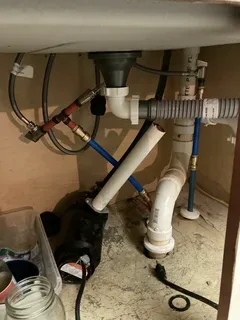
Under-sink plumbing rebuilt in an Almonte kitchen: new PVC drain and trap, the dishwasher drain hose tied back into the waste line, and the hot and cold supply lines refitted to their shut-off valves.
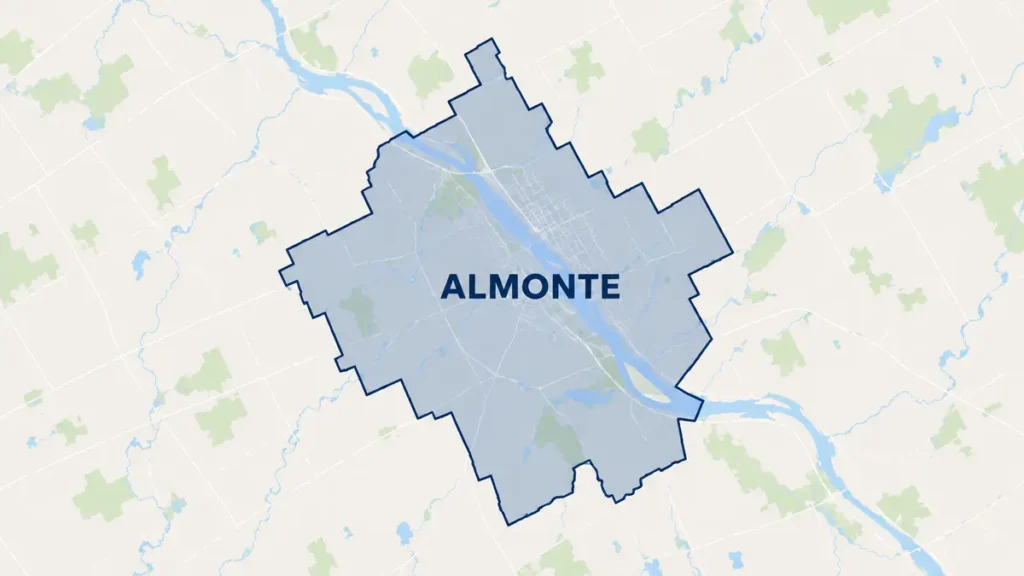
Almonte is the main community in the Town of Mississippi Mills, in Lanark County, and it works as two plumbing markets rather than one. The core is an old mill town built in stone and brick beside the Mississippi River, with a dense main street of nineteenth-century commercial buildings and the surrounding streets of houses that went up alongside them, all on municipal water and sewer. Outside that core, the rest of Mississippi Mills is countryside, and rural properties there draw from private drilled wells and discharge into private septic beds. Those two categories share a postal town and almost nothing else. A heritage building on Mill Street and a farmhouse ten minutes out have opposite problems, opposite risks and opposite maintenance advice, so the first useful question on any Almonte call is which of the two we are dealing with.
That needs saying, because a lot of plumbing advice circulating in this region is written for city readers and gets applied to Almonte addresses by mistake.
The City of Ottawa's Residential Protective Plumbing Program does not apply to an Almonte address, and neither does the City's permit process.
Permits for work that requires them run through Mississippi Mills, which sets its own requirements and inspections.
If a building is a designated heritage property, alterations affecting its exterior can involve additional municipal approval as well, which is a Mississippi Mills matter and a conversation to have with the municipality before work is planned rather than after it starts.
Whether any local rebate or support program exists for flood protection here is also a question for the municipal office, and owners should confirm that locally rather than relying on anything a contractor tells them.
Locating water precisely in a stone or brick structure, where you cannot simply open a wall to look and the damage travels a long way from the source.
Pumps, pressure tanks, buried service runs and drainage on the farm properties across Mississippi Mills, where nothing is municipal.
Restaurants, shops and upper-floor apartments in old buildings, where drainage laid for one use now serves several and access is tight.
The heritage core is where the specialist work is. A leak inside a limestone or brick building behaves differently from a leak in a wood-framed house: water tracks along mortar joints and structural cavities and can appear a long way from where it started, so following the stain leads you to the wrong place. There is also a strong reason not to open exploratory holes, because in these buildings the finishes and the fabric are part of what makes the property worth what it is worth. That combination is why leak location is worth doing properly here rather than by demolition. The same constraint shapes every other job in the core. Routing a new supply line, adding a bathroom on an upper floor, or replacing a drain in a building with stone walls and original floors is as much a routing problem as a plumbing one, and the plan should be agreed before anything is opened.
Almonte's mill-era buildings were designed for uses that mostly no longer exist, and many have been converted: commercial at street level with apartments above, former industrial space turned into retail or hospitality, large single houses divided into units. Every one of those conversions adds fixtures to drainage that was laid for something else. The symptoms are consistent and worth recognising. Drainage that copes fine most of the time and backs up when several units use water at once is a capacity problem rather than a blockage. Odour that appears in one part of a building and not another usually means a dry or missing trap on a fixture nobody uses. And a food-service tenant in a building that never had one needs grease handled properly, because a grease-loaded drain in an old jointed line is a repeat callout rather than a one-off. Our Ottawa plumbers working into Lanark County quote that kind of work after looking at the building, not from a description.
Municipal water and sewer, masonry construction, layered plumbing from several eras, and repairs planned around what cannot be opened up.
Private wells and septic, long buried service runs, and a failure that removes water entirely rather than reducing pressure.
Permits and any local programs run through the municipality. Nothing about the City of Ottawa's process or rebates applies to either.
On the rural side the priorities invert completely. There is no main and no municipal responsibility, so the pump, the pressure tank, the buried line from the well to the house and everything in the septic system belong to the owner. A pump failure out here does not reduce service, it ends it, and a long power outage does the same thing until the pump has electricity again. Water character varies from one well to the next across this countryside, so iron staining, sulphur odour and genuine hardness are all realistic possibilities, and unlike a municipal property, treatment equipment can be entirely justified. The right way to choose it is from a test of your own water rather than from a neighbour's setup or from anything written about city supply. For anyone buying rural property in Mississippi Mills, having the well system, the drainage and the sump looked at before closing is worth considerably more than the same inspection would be in town.
In a masonry heritage building water travels far from its source, and finding it precisely protects fabric that cannot be replaced.
Almonte is Mississippi Mills, not the City of Ottawa. Permits and any local programs run through the municipality and we say so plainly.
Wells, pressure tanks, buried runs and septic-side drainage across Mississippi Mills, diagnosed from the well end rather than from the tap.
Where old drainage now serves apartments and food service, we look at capacity and grease rather than clearing the same line repeatedly.
No. Almonte is part of the Town of Mississippi Mills in Lanark County, not the City of Ottawa, so the City's Residential Protective Plumbing Program does not apply to properties here. Permits for work that requires them go through Mississippi Mills, which sets its own requirements. Whether the municipality runs any support program of its own is a question for the municipal office, and we would rather you confirm that locally than take a contractor's word for it.
By locating rather than searching. In masonry construction water tracks along mortar joints and cavities, so the visible stain is often well away from the actual source and following it leads to the wrong wall. Working from the supply side, isolating sections and narrowing down where water is actually moving gives a location before anything is opened. In a heritage building that matters twice over, because the fabric and finishes are part of the property's value.
Commonly, yes. Almonte itself is on municipal water and sewer, but the surrounding rural parts of Mississippi Mills are largely on private drilled wells and private septic beds. On those properties the pump, pressure tank, buried service line, septic tank and bed are all owned and maintained by the property owner, with no municipal system standing behind any of it. That difference changes both the maintenance routine and what happens during a power outage.
Plumbing permits for work that requires them run through Mississippi Mills rather than through the City of Ottawa. Separately, if a building is a designated heritage property, alterations that affect its exterior can involve additional municipal approval. Interior plumbing work is usually a different matter from exterior alterations, but the safest sequence is to check with the municipality before planning work rather than after starting it.
Possibly, and unlike a municipal property the question is genuine. Private wells across this countryside vary considerably, and iron staining, sulphur odour and real hardness are all plausible. The correct approach is a test of your own water before any equipment is chosen, since a neighbour's setup reflects their well rather than yours. Advice written about city water supply does not transfer to a private well at all, in either direction.
That pattern points to capacity rather than to a blockage. Mill-era buildings were drained for the use they were built for, and conversions add fixtures the original line was never sized to carry, so it copes at low demand and fails at peak. Grease from a food-service tenant makes it worse by narrowing the pipe further. The answer is usually a look at the actual line and its load rather than repeated clearing of the same section.