Recent Project in Carp
An outdoor in-ground grease interceptor in Carp with three chambers under steel plate lids, opened and cleaned out so waste could pass through each chamber again.
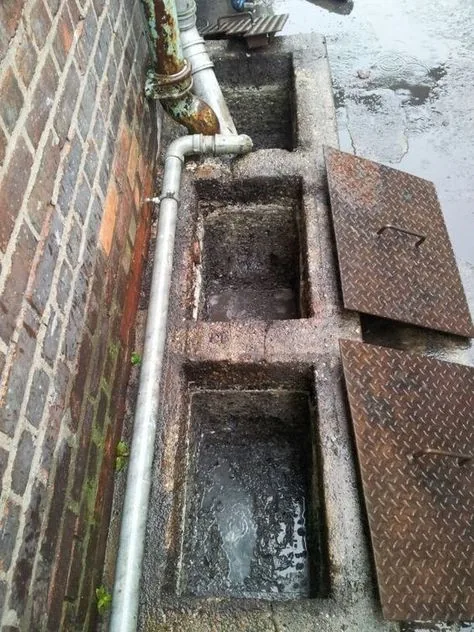
An outdoor in-ground grease interceptor in Carp with three chambers under steel plate lids, opened and cleaned out so waste could pass through each chamber again.
The thing that separates a Carp plumbing call from a city one is that there is no utility standing behind the tap. Carp is not on Ottawa's main water and sewer network. A small number of village properties are served by a local system operated by the City, and the great majority of properties in the village fringe and out across the surrounding West Carleton farmland draw from a private drilled well and discharge into a private septic bed. That means the pump, the pressure tank, the pressure switch, the well seal, the buried line from the well to the house and everything downstream of it belong to you. When pressure disappears at 6am, nobody else is going to fix it, and the diagnosis has to start at the well rather than at the fixture. Knowing which of those two categories your own property is in is the first thing worth establishing, because it changes who is responsible for what.
Carp sits on fractured limestone and the ridge country west of Kanata, which produces genuinely variable well water from one property to the next. Neighbours can have completely different results.
Both are common here. Iron shows up as orange staining on fixtures and laundry, and a brown-black stain points at manganese alongside it.
Produces the rotten-egg smell people notice most in hot water. It is a question about the character of your water rather than a fault in the plumbing.
A real issue on limestone aquifers in a way it never is on Ottawa city supply. This is the one part of the region where softeners and iron filters genuinely belong.
Fine grit from a well is what shortens the life of tank water heaters, mixing valves and toilet fill valves out here.
The correct way to size any of this equipment is from a test of your own water rather than from what a neighbour installed.
Submersible pump replacement, pressure switch faults, and the waterlogged bladder tank that makes a pump cycle on and off every few seconds.
Genuine well-water treatment specified against a test of your own water, not the blanket advice that applies to city supply.
Yard hydrants, barn supply, stock waterers and the backflow protection that keeps a trough or a sprayer from feeding back into the house line.
Carp is within the City of Ottawa, so plumbing permits and inspections run through the City in the normal way. One point worth being clear about, because it is widely misunderstood in rural Ottawa: the City's Residential Protective Plumbing Program is a sewer-backup protection program, aimed at homes connected to the municipal sewer system. A property on a private septic bed cannot experience a municipal sewer surcharge, so that program is not the relevant one for most Carp addresses, whatever your neighbours in Kanata may have received. That does not mean basement water protection is irrelevant here. It means the risk is groundwater and surface water rather than sewer backup, and the answer is a properly sized sump, a discharge that runs clear of the foundation and a system that still works when the power is out. If you think a specific property may be an exception, confirm it with the City rather than assuming either way.

Rural service lines have to be buried well below frost, and where they are not, or where the line rises into an unheated crawl space, a barn or a poorly insulated addition before it reaches the pressure tank, that is where a Carp property freezes. The other rural freeze point is the pressure tank itself if it lives in an outbuilding or a cold utility room. Long driveways and unploughed laneways then make the repair harder, so the practical advice is preventive: know where your buried line comes into the building, keep that space above freezing, insulate any run in an unheated space rather than relying on the building around it, and drain and isolate outdoor hydrants and hose bibs before the first hard freeze. Barn hydrants that are supposed to self-drain often do not once the drain hole silts up, and that is a common and avoidable winter failure on Carp horse properties.
Cut-in and cut-out pressures, how long the pump runs, and whether it is short-cycling, which destroys pumps faster than anything else out here.
Air charge against the switch setting and whether the bladder has failed, since a waterlogged tank is the single most common cause of a rural pressure complaint.
Where the buried line enters, what runs through unheated space, and whether outdoor hydrants and hose bibs actually drain the way they were meant to.
Septic changes daily habits in ways worth knowing. Chemical drain cleaners are a poor idea on any drain but a particularly poor one on a septic system, since they attack the bacteria the tank depends on and rarely clear the blockage anyway. Wipes, fats and heavy solids are the usual causes of a rural drain problem, and a slow drain across every fixture in the house at once is a different signal from one slow fixture: the first suggests the tank or the outlet, the second suggests the fixture. Doing several laundry loads back to back sends a hydraulic surge into a bed that may already be saturated in a wet spring. If you are buying out here, a plumbing inspection before closing is worth far more than in the city, because there is no utility record to fall back on and the pump, tank, treatment gear and drainage are all yours the day you take the keys. Our plumbers who cover the wider Ottawa area will travel out for that inspection the same as for a repair.
On a private system the pump, switch and tank explain most complaints, and diagnosing from the fixture end wastes your money.
Iron, sulphur and hardness vary property to property on this bedrock. We advise from your water, not from a general rule.
Yard hydrants, barn supply and stock water are part of the job here, including backflow protection where a hose could siphon back.
A failed pump means no water at all, not reduced service, so rural calls get the same round-the-clock response as city ones.
That pattern is called short-cycling and it is nearly always the pressure tank rather than the pump. The tank holds an air charge against a bladder so the pump can rest between draws. When the bladder fails the tank fills with water, there is no cushion left, and the pump switches every time water moves. It burns pumps out quickly. Testing the air charge against the switch settings identifies it in minutes, and replacing the tank fixes it.
Usually not, and it is worth understanding why. Carp is inside the City of Ottawa, but the Residential Protective Plumbing Program is aimed at protecting homes connected to the municipal sewer system from sewer backup. A property on a private septic bed is not exposed to a municipal sewer surcharge, so the program generally is not the relevant one. Groundwater protection through a properly sized sump is the meaningful measure here. Confirm your own case with the City.
Possibly, and this is one of the few parts of the Ottawa area where the question is genuine. Ottawa city water is soft, but Carp properties on private wells draw from fractured limestone and can have real hardness, along with iron, manganese or sulphur. The right approach is a test of your own water before buying anything, because neighbouring wells differ. Sizing treatment from a test avoids paying for equipment that treats a problem you do not have.
That is iron, and it is common in this area. Orange staining points to dissolved iron oxidising when it meets air, and a brown-black stain suggests manganese alongside it. Neither is dangerous at the levels usually found, but both are stubborn on fixtures and fabric. Filtration handles it, and the type depends on how much iron is present and whether bacteria are involved, which a water test tells you before any equipment is chosen.
A frost-free yard hydrant is designed to drain its riser below frost every time you shut it off. When the small drain hole at the bottom silts up or the drainage pit around it clogs, the riser holds water and the hydrant freezes solid, and that is the usual failure rather than the design. Checking that it drains before winter, keeping the surrounding gravel bed free-draining and never leaving a hose attached are the practical preventions.
It stops completely. A private well has no pressure without the pump running, so unlike a city property you lose water entirely rather than losing pressure. Toilets can be flushed manually with stored water, but nothing comes from the taps. Properties out here that lose power regularly are the best candidates for a generator connection sized to run the pump, and it is worth sorting that out before a long winter or storm outage rather than during one.