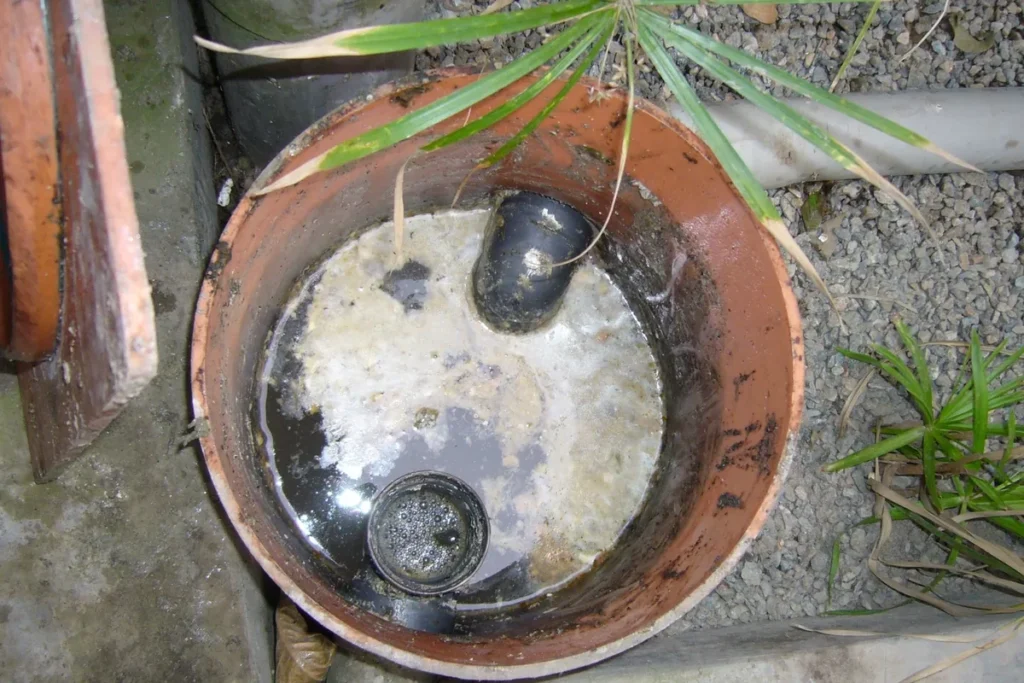
Plumbing Services Ottawa cleans, sizes and installs grease traps and interceptors for Ottawa restaurants, cafeterias and food service properties.
Full pump-outs, not skims
Scheduled service intervals
Sizing and new installations
Get a Grease Trap Quote
Tell us about your project and we will get back to you within 24 hours.
Your information is secure and never shared.
How Often a Grease Trap Needs Pumping, and Why
A grease trap needs servicing when the grease and solids inside it have eaten enough of its volume that water no longer sits still long enough to separate, and the working rule most operators use is to pump out before the combined floating grease layer and settled solids reach about a quarter of the unit's depth. That translates to very different calendars in different kitchens. A small under-sink hydromechanical unit in a cafe can hit that point in a week or two. A large in-ground interceptor behind a full-service restaurant may run one to three months. The variable is not the calendar, it is how much fat, oil and grease your menu and your dish routine produce against the capacity you installed. We measure the layers on the first visit and set the interval from what we find, then adjust it once there is a service history to read.
Sizing and flow
Most Grease Problems Start With Sizing
Sizing is where most grease problems start, and it is decided by flow, not by floor space. An interceptor is matched to the drainage flow rate of the fixtures tied into it – typically the three-compartment sink, the pre-rinse station, the pot sink, the wok or fryer station and any floor sinks in the cook line – based on the volume those fixtures hold and how fast they drain down. Undersize it and water sprints through faster than grease can rise, so the unit reads as working while the grease is already in your lateral. Two details matter as much as the rating. A flow control fitting ahead of the trap keeps incoming flow inside the design rate instead of dumping a full sink into it at once. And a commercial dishwasher generally should not discharge into a grease trap at all, because the water is hot enough and the detergent aggressive enough to hold the grease emulsified straight through the unit and out the other side. Food waste disposers are the other common mistake, since they load the interceptor with solids it was never sized to hold.
Interior, Exterior and Automatic Units
Three formats, three service realities, and the choice is usually made by kitchen volume and available space.
Interior Hydromechanical Traps
Under-sink or floor-mounted units for lower-volume kitchens. Small capacity means frequent service, often weekly or monthly, but access is easy and the job is quick.
Exterior In-Ground Interceptors
High-capacity concrete or polymer tanks outside the building for busy restaurants. Serviced less often, but a full evacuation is a bigger, messier and more involved job.
Automatic Grease Removal Units
Powered units that skim grease into a collection bin on a timer. They still need the solids chamber cleaned and the heater and skimmer checked, so they reduce labour rather than eliminate it.
A Pump-Out Is Not a Skim
There is a real difference between a pump-out and a skim, and it is the difference most kitchens are unknowingly paying for. Skimming pulls the floating grease cap off the top, which makes the unit look clean for a day and leaves the settled solids and the emulsified layer in place. A full service evacuates the entire contents, scrapes the walls, baffles and inlet and outlet tees, clears the solids off the bottom, inspects the baffles for damage or displacement, checks the flow control and the vented air intake, and refills the unit with water so it is ready to separate on the next shift. A displaced or corroded baffle is worth catching, because it lets incoming flow short-circuit straight to the outlet and the trap stops working while the invoices keep arriving. Additive products that claim to dissolve grease are worth being sceptical about: emulsifying grease does not remove it, it just moves the problem past your trap and into your lateral, where it cools and hardens again.
What a Full Service Covers, in Order
Every step below happens on every pump-out we do, which is what separates it from a skim.
Measure before removing
The grease cap and the settled solids are measured first, so the interval can be checked against reality rather than habit.
Evacuate, do not skim
The full contents come out, not just the floating layer.
Scrape the internals
Walls, baffles and the inlet and outlet tees, where hardened grease clings.
Clear the settled solids
Food solids come off the bottom of the chamber.
Inspect the hardware
Baffles, tees, lids and gaskets checked for damage, displacement or corrosion.
Check flow control and vent
The flow control fitting and the vented air intake have to be present and clear.
Refill with water
So the unit can separate on the very next shift instead of the one after.
Record and schedule
Date, volume removed and condition found, with the next service date set before we leave.
What happens at the sink between visits decides the interval as much as the hardware does. Dry-wiping pans and scraping plates into the waste bin instead of the disposer keeps both grease and solids out of the trap in the first place. A solids strainer on the pot sink stops rice, pasta and vegetable trim from filling the bottom of the chamber with material that has nothing to do with grease. Fryer oil belongs in a collection bin and never in a drain, at any temperature. Hot water does not solve anything: it simply carries liquefied grease further along the line to a colder section where it sets again, usually somewhere you cannot reach. Staff turnover is the quiet variable in all of this, because habits reset with every new hire, and a kitchen that had a twelve-week interval last year can find itself blocking in six without anything about the equipment having changed.
The Paper Trail an Inspection Wants
Municipal sewer use rules limit what a property can discharge, and the record is what proves you are keeping to it.
Dated Service Records
Date of service, the unit serviced, the volume removed and the condition of the baffles, so the interval you claim to run is the interval you can show.
Disposal Documentation
Where the waste went after it left your property, kept with the service record rather than assumed, since that is the question that follows the first one.
On-Site Log and Next Due Date
The log kept on site where a manager or an inspector can find it, with the next service date on it, not in an email thread from last year.
When a Trap Has Been Left Too Long
The symptoms of an overdue trap arrive in a predictable order. First the kitchen drains slow, usually at the fixture furthest from the trap. Then odour appears near the unit or at a floor drain, worst at the start of a shift when the traps have sat. Then the line beyond the interceptor blocks entirely, and that is the version that happens at the worst possible moment, because the load that finally closes it is the dinner rush. By that point the fix is no longer a pump-out – it is hydro jetting the lateral to cut hardened grease off the pipe wall, and sometimes a camera run to check the line has not been narrowed permanently. Getting on a set interval is cheaper than any of that. Our commercial plumbing team in Ottawa can put a property on a fixed cycle, handle the pump-outs and the paperwork together, and size and install a new interceptor for a kitchen build-out or a menu change that has outgrown the original unit.
Fitting Out a New Kitchen
Interceptor decisions are cheapest at the drawing stage. Getting them right at design is straightforward, while retrofitting either one into a finished kitchen is disruptive, expensive, and always happens during trading hours.
Size It on Real Fixtures
Sizing comes first, based on the fixtures you are actually installing rather than the ones in the previous tenant's layout.
Exterior Access for the Truck
An in-ground unit needs a route a service truck can reach and a lid that can be lifted without moving a patio, a parking barrier or a delivery cage.
Clearance on an Interior Unit
Room under the sink to open the cover and lift the internals out without dismantling the plumbing around it.
Why Plumbing Services Ottawa for Grease Trap Service
What a food service operator actually needs from a grease trap contractor.
Full evacuation, not a skim
Walls, baffles and tees scraped, solids removed, unit inspected and refilled, so the trap works on the next shift rather than looking clean for a day.
Interval set from measurement
We measure the grease and solids layers and set the cycle from what is actually accumulating, then adjust it as a service history builds.
Records you can produce on request
Dated service records, disposal documentation and an on-site log, kept in a form a manager or an inspector can read without hunting.
Scheduled between service periods
Pump-outs booked around your covers, and 24/7 dispatch if a line blocks mid-shift anyway.
Grease Trap FAQs
How often does a grease trap need to be cleaned?
It depends entirely on capacity against the grease your kitchen produces. A small under-sink unit in a cafe can need service weekly or monthly, while a large in-ground interceptor behind a busy restaurant often runs one to three months. The working rule is to pump out before grease and solids together reach about a quarter of the unit's depth. We measure on the first visit and set the interval from that.
What is the difference between a skim and a full pump-out?
A skim removes the floating grease cap and leaves the settled solids and the emulsified middle layer behind, so capacity is only partly restored. A full pump-out evacuates the whole unit, scrapes the walls, baffles and inlet and outlet tees, clears the bottom solids, inspects for baffle damage, and refills with water. Paying for skims on a monthly cycle is how a trap silently falls behind.
How is a grease trap sized for a kitchen?
By the drainage flow rate of the fixtures connected to it, not by the size of the restaurant. The volume of the three-compartment sink, pre-rinse, pot sink and any cook line floor sinks, and how quickly they drain down, set the required rating. Undersized units let water pass too fast for grease to separate, so the trap appears to work while grease is already collecting in your lateral.
Can our dishwasher drain into the grease trap?
Generally it should not. Dishwasher discharge is hot and heavily detergented, and that combination keeps grease emulsified as it passes through, so it travels straight out of the interceptor and cools further down the line. Food waste disposers cause the mirror problem by loading the unit with solids it was not sized to hold. Both are worth checking if a trap is being serviced on schedule and the line still blocks.
What records should we keep for an inspection?
Dated service records showing when each unit was serviced, what was removed and the condition it was found in, documentation of where the waste went afterward, and an on-site log with the next service date on it. Keep them together and keep them where a manager can produce them immediately. The interval you run only counts if you can show it.
Do grease trap additives work?
Treat the claims carefully. Products that emulsify grease do not remove it from the building – they carry it past the interceptor in suspension, and it separates and hardens again further down the lateral where nothing is there to catch it. Bacterial products have their advocates, but none of them replace physically removing the accumulated grease and solids on a schedule.
Related Commercial Services
Commercial Plumbing in Ottawa
Commercial plumbing in Ottawa for offices, restaurants, retail and multi-unit buildings. Off-hours scheduling, written quotes and documented work orders.
Hydro jetting in Ottawa for grease-packed and root-filled drain lines that keep re-clogging. Camera-checked before and after, for homes and restaurants.
Drain cleaning in Ottawa for kitchen, bathroom, floor and main-line drains – cable clearing, hydro-jetting and camera diagnosis before repair. Written quotes.
Drain and sewer camera inspection in Ottawa – real-time footage, the defect located and depth-marked on the surface, and a written report you can act on.
To provide the best experiences, we use technologies like cookies to store and/or access device information. Consenting to these technologies will allow us to process data such as browsing behaviour or unique IDs on this site. Not consenting or withdrawing consent, may adversely affect certain features and functions.
Functional
Always active
The technical storage or access is strictly necessary for the legitimate purpose of enabling the use of a specific service explicitly requested by the subscriber or user, or for the sole purpose of carrying out the transmission of a communication over an electronic communications network.
Preferences
The technical storage or access is necessary for the legitimate purpose of storing preferences that are not requested by the subscriber or user.
Statistics
The technical storage or access that is used exclusively for statistical purposes.The technical storage or access that is used exclusively for anonymous statistical purposes. Without a subpoena, voluntary compliance on the part of your Internet Service Provider, or additional records from a third party, information stored or retrieved for this purpose alone cannot usually be used to identify you.
Marketing
The technical storage or access is required to create user profiles to send advertising, or to track the user on a website or across several websites for similar marketing purposes.