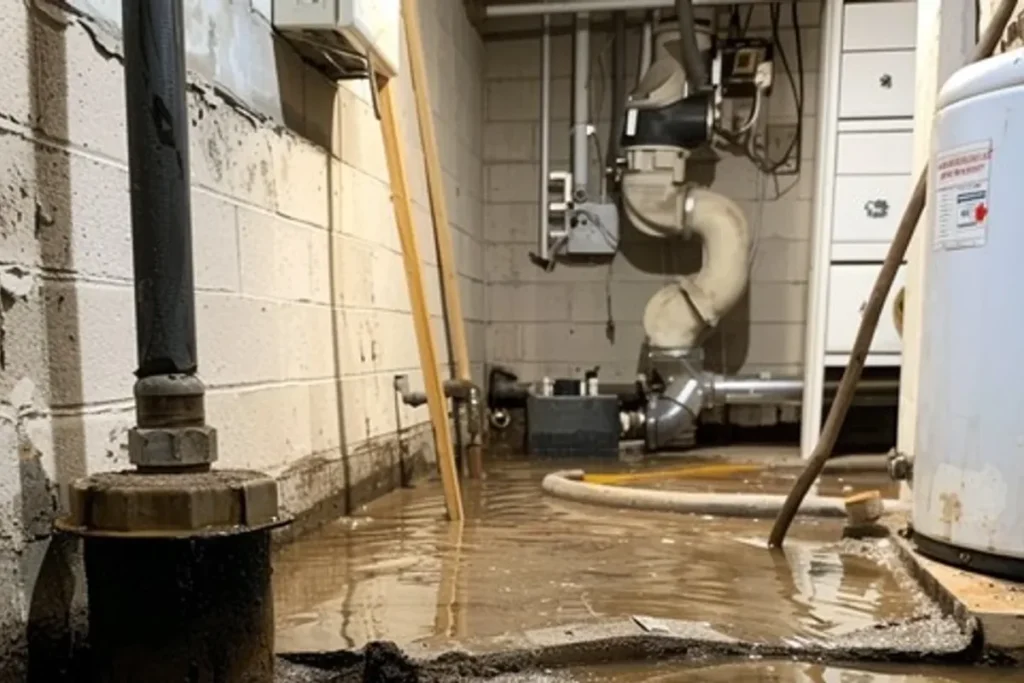
Plumbing Services Ottawa installs and repairs sump pumps and pits throughout Ottawa, ahead of spring thaw and heavy-rain season.
New pit installation
Pump repair & replacement
Permit-compliant work
Get a Sump Pump Quote
Tell us about your project and we will get back to you within 24 hours.
Your information is secure and never shared.
Why a Working Sump Pump Matters in Ottawa
Spring thaw and heavy rain push groundwater toward Ottawa basements through weeping tile and foundation drains, and the sump pump is the only thing keeping that water from filling the pit and rising into the basement. A pump that fails in that window – from age, a stuck float, a blocked discharge or a power outage during the same storm that raised the water table – is one of the more expensive plumbing failures a homeowner can have, because basement flooding is often excluded from standard home insurance and the damage lands on finished space and stored contents at the same time.
Older Ottawa homes
When the Weeping Tile Still Runs Into the Sewer
In some older Ottawa homes the foundation drain still discharges into the sanitary sewer rather than into a sump pit. That arrangement sends clear groundwater into a system built for waste, adds to the load on the municipal sewer during a storm and leaves the house directly exposed to any surcharge in it. Converting a foundation drain over to a proper sump pit and pump, usually alongside a backwater valve, is exactly the kind of work the City’s protective plumbing program exists to encourage. Whether your home is in that category is something a technician can determine on site by looking at where the weeping tile actually terminates.
New Installation vs Repair
New Pit & Pump
Cutting a new pit into the slab where none exists, sized to the drainage the property actually produces, with a permit and inspection.
Pump Replacement
Faster and less costly than a new install when the pit itself is sound. The check valve and discharge get replaced with it, not reused.
Backup Systems
Storms cause outages, and an outage stops a pump. A battery backup runs the pit when the power that runs the primary pump is gone.
The City of Ottawa's Residential Protective Plumbing Program currently rebates up to $3,000 toward a sump pump installed in a new pit, or $1,500 for a pump in an existing pit, for eligible homes built before January 1, 2004, plus 100% of the building permit fee. The rebate covers new installations, not straight pump-for-pump replacements, and the application has to be submitted within 12 months of the permit date – we can tell you whether a property looks eligible before work starts, though final confirmation is always through the City's own program.
How a Sump Pump Gets Diagnosed
What the Pour Test Reveals
Pour water into the pit and watch the whole cycle. The pump should start at the right level, clear the pit and shut off cleanly, and what goes wrong shows up in that cycle.
Hums But Moves Nothing
A pump that hums without shifting water has a seized impeller or a jammed intake, and it is the failure most homeowners miss because the pump sounds alive.
Short Cycles or Never Stops
A float set too low or a tether snagged on the pit wall, a failed check valve letting the discharge column fall straight back in, a float stuck in the up position, or a pump undersized for the volume arriving.
Runs But the Pit Stays Full
When the pump runs and the water level does not drop, the problem is outside: a blocked or frozen discharge line the pump cannot push against.
Pour-test the pit and watch the full start, clear and stop cycle
Check the float type and its travel, and whether the tether can snag
Listen for a hum with no flow, which means a seized or blocked impeller
Watch for backflow chatter at the check valve after shutdown
Follow the discharge outside to confirm it is clear and drains away from the foundation
Confirm the receptacle is live, on its own circuit, and not sharing with a freezer or dehumidifier
Ottawa adds one failure mode that milder cities do not have. A discharge line that ends flat at grade, or runs uphill before it turns down, will hold water and freeze solid in January. The pump then runs against a closed pipe, overheats and burns out, and the homeowner finds out during the March melt when it is needed most. A discharge should leave the wall and fall continuously, terminate well clear of the foundation, stay unrestricted at the outlet, and never tie into the sanitary sewer. Keeping snow banked away from the outlet through the winter costs nothing and prevents the most common seasonal pump failure we see.
What a Sump Pump System Includes
Sump Pit
The basin that collects groundwater from the weeping tile before it is pumped out, sized so the pump is not cycling every minute.
Primary Pump
Sized on the volume arriving and the vertical lift to the discharge point, with a float type chosen to suit the width of the pit.
Check Valve & Discharge
A check valve stops the standing column falling back into the pit between cycles, and the discharge carries water clear of the foundation.
Cost Drivers and the Replace Decision
Cutting a new pit into a concrete slab, connecting the weeping tile to it and routing a new discharge is a bigger job than dropping a pump into a pit that already exists, and that is the main split in price. After that it is the distance to a sensible discharge point, whether an electrical receptacle needs to be added, whether a backup system goes in, and whether a backwater valve is being installed at the same time, which is usually cheaper combined than done twice. On the replace side, a pump that has failed once at an age where the seals are gone gets replaced rather than rebuilt, and if it failed while running against a frozen discharge, fixing the discharge matters more than which pump goes back in. Talk to the Ottawa plumbing team before the melt rather than during it, because February and March are when the entire city discovers the same problem at once.
Why Plumbing Services Ottawa for Sump Pump Work
Permit-compliant installs
A new sump pit and pump installation is completed with the required City plumbing permit and inspection, which the rebate also depends on.
Rebate guidance
We flag whether your property looks eligible for the City's protective plumbing rebate before work starts, with final confirmation through the City.
Discharge done for a cold climate
Continuous fall, an outlet clear of the foundation, and no dead-level run that ices up and burns out the pump in January.
Repair or full install
Whether it is a failed pump in a sound pit or a home with no sump system at all and weeping tile going somewhere it should not.
Sump Pump FAQs
Does the City of Ottawa offer a rebate for sump pumps?
Yes. The Residential Protective Plumbing Program currently rebates up to $3,000 for a new pit and pump, or $1,500 for a pump in an existing pit, for eligible homes built before January 1, 2004, plus 100% of the building permit fee. It applies to new installations rather than pump-for-pump swaps, and applications are due within 12 months of the permit date. Confirm current eligibility with the City directly.
Does a new sump pump installation need a permit?
Yes. A new sump pit installation requires a City plumbing permit and an inspection, and that permit is also what the rebate application is tied to. We pull the permit as part of the installation and coordinate the inspection. A straight pump swap in an existing pit is generally treated differently, and we will tell you which category your job falls into.
How often should I test my sump pump?
Test it before spring thaw and again after any long dry stretch when the pump has not cycled. Pour a bucket of water into the pit, confirm the pump starts at the right level, clears the pit and shuts off cleanly, then go outside and confirm water is actually leaving the discharge. A pump that runs but moves nothing is the failure most people miss.
Why does my sump pump run constantly?
Usually a float stuck in the up position or snagged on the pit wall, a pump undersized for the volume arriving, or a failed check valve letting the discharge column fall back into the pit so the same water is pumped repeatedly. Constant running wears a pump out quickly, so it is worth diagnosing before the season it is needed.
Do I need a battery backup sump pump?
It depends on what is downstairs and how often your area loses power. The storms that produce the most groundwater are also the ones that knock out power, and a primary pump does nothing without electricity. If the basement is finished, or the pit runs often in spring, a battery backup is the cheapest insurance in the system.
Can the discharge line freeze in an Ottawa winter?
Yes, and it is a common cause of pump failure here. A discharge that runs flat, dips, or ends buried in a snowbank holds water and freezes. The pump then runs against a blocked pipe until it overheats. The fix is continuous fall from the wall to an unrestricted outlet clear of the foundation, and keeping snow away from the end of it.
Related Flood Protection Services
Backwater Valve Installation in Ottawa
Backwater valve installation in Ottawa, permitted and inspected, fitted inside the dwelling and left accessible – with City rebate guidance before work starts.
Basement flooding plumber in Ottawa – 24/7 emergency response, plus the sump pump and backwater valve work that stops the next one, with City rebate guidance.
Sewer lateral repair and replacement in Ottawa, camera-diagnosed before any digging – cast iron, clay and modern piping, commercial and residential properties.
24/7 emergency plumber in Ottawa for burst pipes, sewage backups, failed sump pumps and no hot water. Written quotes before repair work starts. Call anytime.
To provide the best experiences, we use technologies like cookies to store and/or access device information. Consenting to these technologies will allow us to process data such as browsing behaviour or unique IDs on this site. Not consenting or withdrawing consent, may adversely affect certain features and functions.
Functional
Always active
The technical storage or access is strictly necessary for the legitimate purpose of enabling the use of a specific service explicitly requested by the subscriber or user, or for the sole purpose of carrying out the transmission of a communication over an electronic communications network.
Preferences
The technical storage or access is necessary for the legitimate purpose of storing preferences that are not requested by the subscriber or user.
Statistics
The technical storage or access that is used exclusively for statistical purposes.The technical storage or access that is used exclusively for anonymous statistical purposes. Without a subpoena, voluntary compliance on the part of your Internet Service Provider, or additional records from a third party, information stored or retrieved for this purpose alone cannot usually be used to identify you.
Marketing
The technical storage or access is required to create user profiles to send advertising, or to track the user on a website or across several websites for similar marketing purposes.