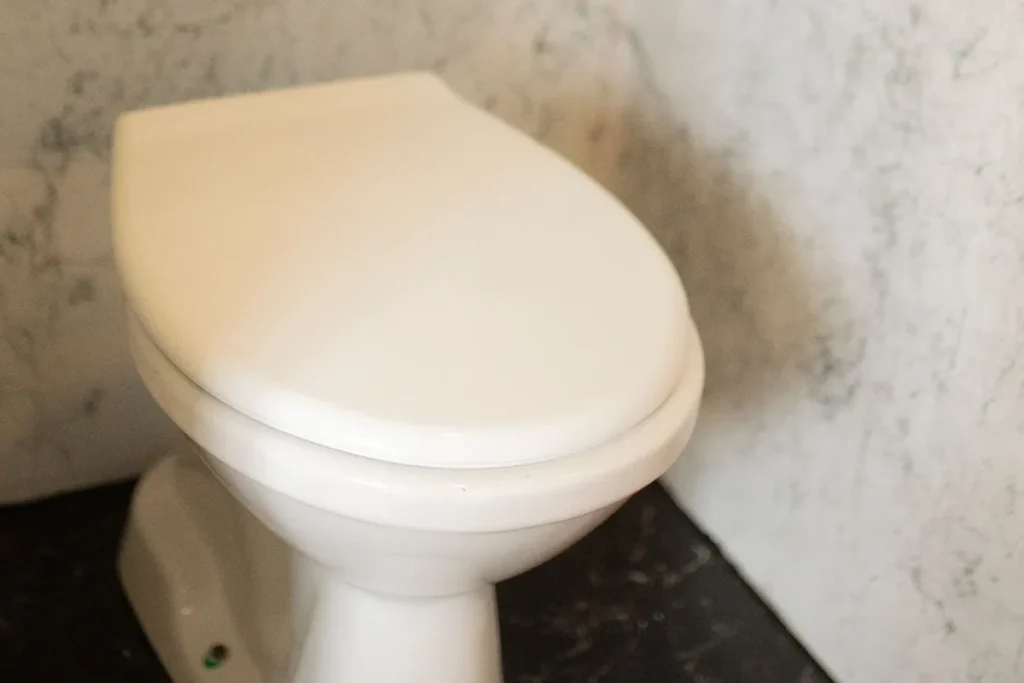
Plumbing Services Ottawa repairs and installs toilets throughout Ottawa – running toilets, leaks, and full replacements.
Running & leaking toilet repair
New fixture installation
Commercial & residential
Get a Toilet Repair Quote
Tell us about your project and we will get back to you within 24 hours.
Your information is secure and never shared.
Common Toilet Problems We Fix
A toilet that runs continuously is almost always a worn flapper, fill valve, or flush valve – a small part that wastes a meaningful amount of water until it's replaced. A toilet that rocks, leaks at the base, or leaves a damp ring on the floor usually points to a failed wax ring or a cracked flange, which can let water reach the subfloor if it sits unaddressed. A weak or incomplete flush can be a partial clog, a vent issue, or an older low-flow model that was never adjusted properly. Each of those has a different fix and a different cost, and the difference between them is usually visible within a few minutes of looking properly.
The distinction that decides the call
Leaving the Tank, or Leaving the Toilet
The distinction that decides most of these calls is whether water is leaving the tank or leaving the toilet. Water leaving the tank into the bowl is an internal part and an inexpensive repair. Water leaving the toilet onto the floor is a seal, a flange or the porcelain itself, and that is where subfloor damage starts. A ghost flush, where the toilet refills briefly on its own with nobody near it, is the tank slowly emptying past a flapper that no longer seats. If you hear that at night, the toilet has been running for weeks and the water has been going down the drain the entire time.
Repair or Replace
Component Repair
Flappers, fill valves, flush valves, supply stops and wax rings. Cost-effective fixes on a toilet with sound porcelain and a good flange.
Full Replacement
A cracked bowl or tank, a hairline seep that will not stop, or a fixture whose parts are no longer made. Porcelain cannot be repaired.
Low-Flow Upgrades
Modern low-flow toilets use meaningfully less water per flush than an older fixture, without giving up flush performance.
How a Toilet Fault Gets Diagnosed
For a running toilet the test takes ten minutes. Put dye in the tank, leave it, and come back: colour in the bowl means the flapper or flush valve seat is leaking past. No colour in the bowl but water still running means the fill valve is overfilling and the excess is going down the overflow tube, so the level is set too high or the valve is not shutting off. For a leak at the base, the toilet gets rocked to check the bolts and the flange, then lifted, because the failure is nearly always visible the moment the fixture comes up: a compressed wax ring, a flange sitting below finished floor level after a tile job, a snapped flange ear, or a soft patch of subfloor. For a weak flush, the tank level and the flapper timing come first, then the rim jets and the siphon jet, then the vent, because a toilet that flushes fine but gurgles is a venting problem rather than a fixture problem.
What Gets Checked on a Toilet Call
Six checks, most of them finished before the toolbox is open.
Dye-test the tank
Dye-testing separates a leaking flapper from a fill valve that is overfilling into the tube.
Check the water level
Compare the level in the tank against the mark on the overflow tube.
Rock the bowl
Rocking the bowl tests the flange, the closet bolts and the floor underneath all at once.
Look at the jets
Check the rim jets and the siphon jet for debris before blaming the fixture for a weak flush.
Test the supply stop
Confirm whether the stop on the wall actually closes and holds, because many old ones do not.
Measure the rough-in
Measure from the finished wall to the closet bolts before any replacement fixture is ordered.
The one measurement that catches people out on a replacement is the rough-in: the distance from the finished wall to the centre of the closet bolts. Twelve inches is standard today, but plenty of pre-war homes in Centretown, Sandy Hill, the Glebe and Hintonburg have 10 or 14 inch rough-ins, and a standard fixture will not sit correctly on either. Measure before buying anything. The related trap is a bathroom that has been retiled: adding tile raises the finished floor, so the flange that used to sit flush now sits low, and the correct fix is a flange extender rather than stacking two wax rings, which is a leak waiting to happen. Cost on a toilet job is driven by exactly these things – flange condition, floor damage under the fixture, rough-in mismatch, whether the old supply stop will close, and access if the bathroom is up a narrow stair.
Signs Your Toilet Needs Attention
Running or Ghost Flushing
Water running between flushes, or the tank refilling on its own, which means the flapper is no longer sealing the flush valve.
Rocking or Leaking at the Base
Movement underfoot, a damp ring on the floor, or lifting flooring nearby. Usually the wax ring, the flange, or the subfloor beneath both.
Weak or Slow Flush
A bowl that empties sluggishly or needs a second flush. Check the tank level and jets first, then look at venting if it also gurgles.
When to Repair and When to Replace
Internal parts are cheap and a sound toilet is worth keeping, so a flapper, a fill valve or a wax ring is a repair every time. Replacement makes sense in four situations: cracked porcelain in the tank or bowl, which cannot be repaired at any price; a slow seep that keeps coming back after the seal has been redone properly; a fixture old enough that the flush valve and seat are obsolete and no rebuild kit fits; and an older high-volume toilet in a house where it is used constantly, where the water saved by a modern low-flow model adds up. Age by itself is not a reason to replace a toilet that works. One habit worth dropping either way is the in-tank bleach tablet, which sits against the rubber parts it is stored with and shortens their life considerably, which is why some toilets seem to need a new flapper every year. If you are pricing this alongside other work, our residential plumbing in Ottawa quotes list fixture repairs separately so you can see what is worth keeping.
Before a Technician Arrives
Three quick checks that change how the job gets scoped.
Test the Supply Stop
Close the stop on the wall behind the toilet and see whether it actually holds. Old multi-turn stops seize or weep once they are moved, and knowing yours does not close changes the job, because the water then has to be shut off further back.
Clear the Floor
Clear the floor around the fixture and the space in front of it, since a toilet has to come up and go somewhere while the work happens.
Measure or Count
If you are replacing rather than repairing, measure the rough-in and note whether the supply comes out of the wall or the floor. In a commercial washroom on flushometer valves, note whether it is one fixture or every fixture on that line, because the second usually means supply pressure rather than the valves.
Why Plumbing Services Ottawa for Toilet Work
Fixed right the first time
A proper flange and wax ring seal, with a flange extender where a tiled floor has raised the finish, not two wax rings stacked up.
Repair when it makes sense
We replace the worn part on a sound fixture rather than pushing a new toilet that the porcelain does not need.
Rough-in checked before ordering
Older Ottawa bathrooms turn up 10 and 14 inch rough-ins, and we measure before a fixture is bought rather than after.
Commercial and residential
Single-fixture homes and multi-fixture commercial washrooms, including flushometer valves rather than tank-style toilets.
Toilet Repair FAQs
Why does my toilet keep running?
Almost always a worn flapper, a fill valve that is not shutting off, or a pitted flush valve seat. A dye test tells you which: colour appearing in the bowl means the flapper or seat is leaking past, while water running with no colour in the bowl means the fill valve is overfilling and the excess is going down the overflow tube.
Should I repair or replace my toilet?
Repair a sound toilet with a worn internal part, since the parts are inexpensive and the fixture is fine. Replace when the porcelain is cracked, when a base seal keeps failing after being redone properly, when parts for the flush valve are obsolete, or when a high-volume older fixture in heavy daily use would pay for itself in water saved.
What causes a toilet to leak at the base?
Usually a failed wax ring, a flange sitting below the finished floor after a tile job, a snapped flange ear, or bolts that have loosened and let the fixture rock. Once the seal is broken, water goes into the subfloor rather than across the tile, which is why the damage is often worse than the visible ring suggests.
What is a toilet rough-in and why does it matter?
It is the distance from the finished wall to the centre of the closet bolts, and it decides which fixtures will fit. Twelve inches is standard now, but pre-war Ottawa homes frequently have 10 or 14 inch rough-ins. Measure before buying a replacement, because a standard toilet will not sit properly against a wall built for a different rough-in.
Are low-flow toilets worth installing?
For most households, yes. A modern low-flow fixture uses meaningfully less water per flush than an older toilet while keeping flush performance, so the saving shows up on every flush for the life of the fixture. The exception is a drain line with a known sag or a very long horizontal run, where flush volume and carry are worth discussing first.
Do I need a permit to replace a toilet in Ottawa?
A like-for-like fixture swap in the same location generally does not require a City plumbing permit. Moving a toilet to a different spot is a different matter, because relocating the drain and its venting is regulated work that may require a permit and inspection depending on scope. We flag which category your job falls into as part of the written quote.
Related Services
Bathroom Plumbing in Ottawa
Bathroom plumbing in Ottawa – shower and tub valve repair, sink and faucet work, hidden leak tracing and renovation rough-in for homes and businesses.
Drain cleaning in Ottawa for kitchen, bathroom, floor and main-line drains – cable clearing, hydro-jetting and camera diagnosis before repair. Written quotes.
Hidden leak detection in Ottawa using acoustic listening, thermal imaging, pressure isolation and meter testing. Slab, wall and underground leaks found.
Commercial plumbing in Ottawa for offices, restaurants, retail and multi-unit buildings. Off-hours scheduling, written quotes and documented work orders.
To provide the best experiences, we use technologies like cookies to store and/or access device information. Consenting to these technologies will allow us to process data such as browsing behaviour or unique IDs on this site. Not consenting or withdrawing consent, may adversely affect certain features and functions.
Functional
Always active
The technical storage or access is strictly necessary for the legitimate purpose of enabling the use of a specific service explicitly requested by the subscriber or user, or for the sole purpose of carrying out the transmission of a communication over an electronic communications network.
Preferences
The technical storage or access is necessary for the legitimate purpose of storing preferences that are not requested by the subscriber or user.
Statistics
The technical storage or access that is used exclusively for statistical purposes.The technical storage or access that is used exclusively for anonymous statistical purposes. Without a subpoena, voluntary compliance on the part of your Internet Service Provider, or additional records from a third party, information stored or retrieved for this purpose alone cannot usually be used to identify you.
Marketing
The technical storage or access is required to create user profiles to send advertising, or to track the user on a website or across several websites for similar marketing purposes.