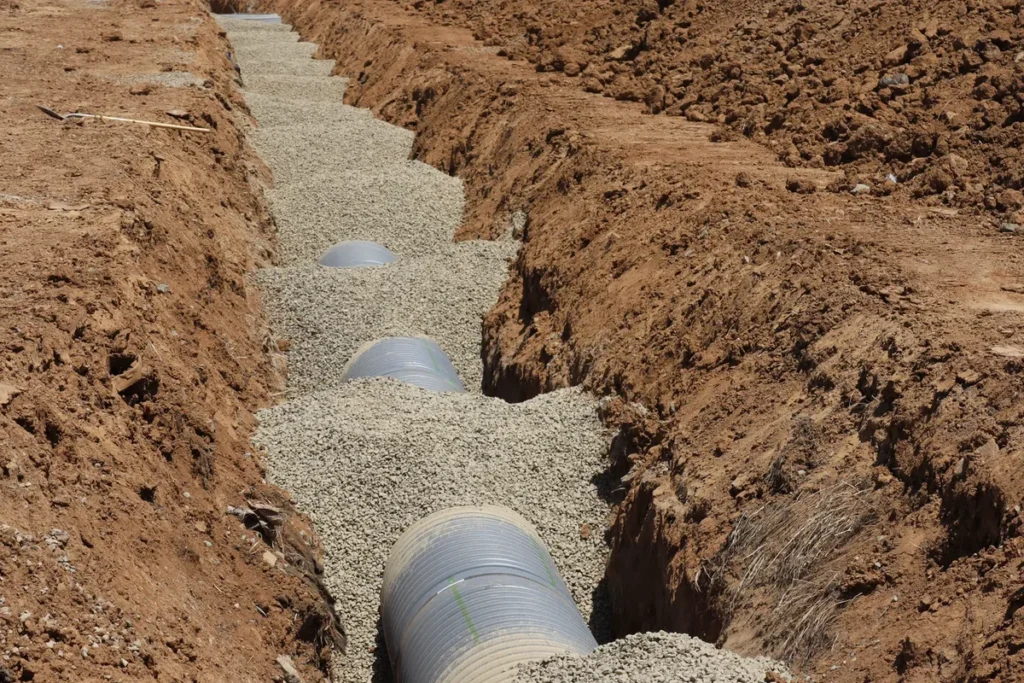
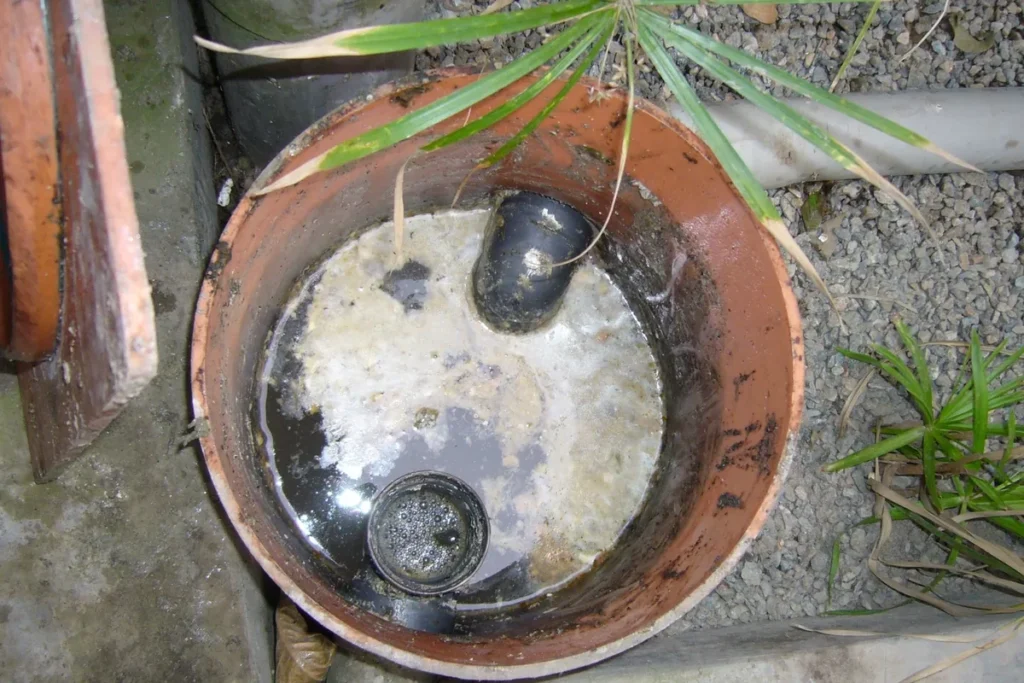
Plumbing Services Ottawa works Vanier’s older streets, rental and multi-unit buildings and Montreal Road storefronts, where the pipe is old and the access is tight.
Clay and cast iron work
Multi-unit and rental buildings
Written quotes
Get a Vanier Plumbing Quote
Tell us about your project and we will get back to you within 24 hours.
Your information is secure and never shared.
Old Pipe on Tight Lots Is the Whole Vanier Problem
Vanier carries some of the oldest housing on the east side of the Ottawa River, and in a Vanier job the material in the ground and the room to reach it are equally important. Much of the neighbourhood is pre-war or early postwar, built on narrow lots close to the street along McArthur Avenue, Marier Avenue, Deschamps Avenue and the grid of streets between them, with rear laneways rather than side yards on many blocks. That combination produces a specific pattern: end-of-life drainage materials that genuinely need replacing, on properties where a full open excavation is difficult, expensive, or means taking out a driveway or a porch to get at it.
Materials in the ground
Clay Joints and Cast Iron Stacks
The materials themselves are predictable for the era. Sewer laterals of that vintage are frequently vitrified clay laid in short sections, and every one of those joints is an opening waiting for a root. Once roots are established they hold paper and grease and the line blocks repeatedly, and the same seasonal movement that lets them in eventually offsets a joint or collapses a section outright. Inside the house, cast iron stacks corrode from the bottom upward, thinning along the invert until the pipe channels out, which shows first as staining or damp on a basement ceiling near where the stack passes through, long before anything actually drips.
Materials at End of Life in Vanier
Vitrified Clay Laterals
Short sections with a joint every few feet, and every joint is a root entry point. Repeat blockages, then offsets, then collapse.
Cast Iron Stacks
Corrode from the bottom up and channel along the invert. Staining on a basement ceiling near the stack is the early warning.
Original Water Services
On the oldest properties the incoming service predates modern materials, so confirming what it actually is comes before any repiping plan.
Access Is What Makes a Vanier Repair Expensive
Access Is What Makes a Vanier Repair Expensive
On a wide suburban lot, replacing a lateral is a trench across a lawn. On a Vanier lot the same pipe can be far harder to reach, and restoring what has to be removed can rival the cost of the pipe work itself.
Under a shared driveway
A lateral running beneath a driveway two households use turns a straightforward excavation into a negotiation as well as a repair.
Beside a foundation on the property line
Narrow lots leave very little working room between the wall of the house and the neighbouring property.
Past a mature street tree
A tree over the line is both the reason roots got in and a serious constraint on where and how the pipe can be opened up.
Out through a rear laneway
Rear laneways are shared, so the work has to be planned around the neighbours who use them rather than dropped on them.
Camera and locate before a shovel
Knowing the depth, the exact route and where the failure actually sits usually reveals a smaller intervention than the worst case, and it is the only way to price the job honestly.
It is also why trenchless methods earn their keep in this neighbourhood more than almost anywhere in Ottawa. Lining an existing lateral from an access point, or replacing it along its own path, avoids opening a driveway, a porch or a laneway that several households depend on. Trenchless is not right for every line, and a collapsed or badly offset section may leave no choice, but on a tight urban lot the difference between a lined pipe and a full open cut can be the difference between a manageable repair and a project. Which one applies is a question the camera answers, not a question the price list answers.
Vanier Building Types
Owner-Occupied Singles
Older detached and semi-detached homes on narrow lots, usually with an original lateral and no backwater valve on the sanitary line.
Duplex, Triplex & Walk-Up
One stack and often one shutoff serving several units, so a single blockage or isolation affects every tenant in the building.
Montreal Road Storefronts
Restaurants, groceries and salons in buildings never designed for the equipment now in them. Grease, waste branch and venting work.
Rental Buildings, Montreal Road and What to Watch For
A large share of Vanier is rental and multi-unit, and that changes the practical side of every job. Converted houses and small walk-ups typically run several units off one stack and one incoming service, so a blockage is never a one-tenant problem and shutting the water for a repair can mean shutting it for everyone. Many of these buildings have no isolation valves at the unit or even the fixture level, which turns a routine faucet swap into a building-wide shutdown unless valves are added first. Occupied buildings need notice, a planned window and a realistic restoration time, and a landlord has an obligation to keep the plumbing working, so a diagnosis that stands up in writing matters.
Montreal Road
Kitchen Equipment in Buildings Never Designed for It
Along Montreal Road the commercial stock is small, independent and mostly in older buildings: restaurants, groceries, convenience stores, salons and takeaways. Kitchen equipment has usually been retrofitted into a building that was never designed to carry it, which shows up as waste branches too small for the load, venting that was extended rather than redesigned, and a grease interceptor that is either undersized or absent. Grease service on a schedule costs a fraction of an emergency line clearing during a dinner service, and any premises with a boiler or a commercial dishwasher carries a backflow assembly needing testing and a report.
There is one more thing worth raising on the oldest Vanier properties. Houses from the first half of the last century can still have a water service made of materials no longer used, and confirming what the incoming pipe actually is should happen before any repiping is planned rather than after the walls are open. The City runs a program addressing lead water services on the public side of the property line, with the private side from that line into the house remaining the owner's responsibility. Details and eligibility come from the City directly. From our side the useful step is simply identifying what is there, because you cannot plan around a service line nobody has looked at.
Day to day, the signals a Vanier owner should act on are repetition and smell. A main line that backs up more than once a year is roots or an offset, not bad luck. A sewage smell in a basement after rain on a house with no backwater valve is the warning before the backup, and since the lateral from the property line in belongs to the owner and is normally excluded from home insurance, that warning is worth acting on. Damp or rust staining where a stack passes a basement ceiling is a pipe thinning, not condensation. In winter, enclosed rear porches, unheated back additions and shallow original services are the places that freeze first, and the City will thaw the portion of a frozen service on its own side of the property line at no charge.
Why Vanier Owners and Landlords Call Us
Camera and locate before any digging
On a lot this tight, knowing the exact route and depth is what separates a spot repair from an excavation nobody needed.
Trenchless considered first
Where the pipe allows it, lining or replacing along the existing path keeps a shared driveway or a laneway intact.
Occupied buildings handled properly
Planned shutdown windows, notice for tenants, and isolation valves added where a building has none so the next repair is not building-wide.
Written diagnosis you can act on
Landlords and owners get the camera findings and the options in writing, which matters when the work has to be justified to someone else.
Vanier Plumbing FAQs
Why do Vanier sewer lines get roots so badly?
Because the laterals are old enough to be vitrified clay, which was laid in short sections with a joint every few feet. Each joint is a small opening, roots grow toward the moisture, and once inside they spread into a mass that catches paper and grease. Older street trees on narrow lots put roots right over the line. Cutting them restores flow for a season, but the camera afterward is what tells you whether lining or a spot repair ends the cycle.
Can a Vanier lateral be replaced without digging up the driveway?
Often, yes. Trenchless lining or replacement along the existing path works from access points instead of a continuous open trench, which on a narrow lot can save a driveway, a porch or a shared laneway. It is not universal: a fully collapsed or badly offset section may need an open repair at that point. The camera and locate decide it, and we would rather find that out before quoting than halfway through the work.
I own a rental in Vanier. How do you handle work in an occupied building?
With a planned window rather than an open-ended shutdown. Most small Vanier buildings run several units off one stack and one service, so we establish what has to be isolated and for how long, give you a realistic restoration time to pass to tenants, and where a building has no unit-level valves we will usually recommend adding them so the next repair does not shut the whole building down again.
Could my older Vanier house still have a lead water service?
Homes from the first half of the last century can have a service line made of materials no longer used, and the only way to know is to look at where the pipe enters the foundation. The City has a program covering lead water services on the public side of the property line, while the private side from that line into the house stays the owner's responsibility. Eligibility and process come from the City. We can identify what your incoming service is made of.
Why is my basement ceiling stained near the drain stack?
On a cast iron stack that is usually the pipe thinning from the inside. Iron corrodes along the invert, the wall gets thin, and moisture starts weeping through before there is anything you would call a leak. Staining and rust marks around where the stack passes a joist or a ceiling are the early signal. It is worth assessing at that stage, because a stack that has channelled out will eventually fail somewhere far less convenient.
Do you handle grease traps for Montreal Road restaurants?
Yes, both service and installation. The common problem on that strip is a kitchen retrofitted into a building never designed for it, so the interceptor is undersized, badly located or missing and the waste branch is too small for the load. Scheduled interceptor service costs a fraction of an emergency clearing mid-service, and where the sizing is genuinely wrong we will tell you that rather than keep cleaning something that cannot keep up.
Services Vanier Properties Ask For Most
Trenchless Sewer Lining in Ottawa
Trenchless sewer lining in Ottawa – cured-in-place pipe repair that saves driveways, walkways and mature trees. Camera-assessed first, written quotes.
Drain and sewer camera inspection in Ottawa – real-time footage, the defect located and depth-marked on the surface, and a written report you can act on.
Grease trap cleaning and installation in Ottawa – full pump-outs, sizing that matches your kitchen, and the dated service records an inspection asks for.
24/7 emergency plumber in Ottawa for burst pipes, sewage backups, failed sump pumps and no hot water. Written quotes before repair work starts. Call anytime.
To provide the best experiences, we use technologies like cookies to store and/or access device information. Consenting to these technologies will allow us to process data such as browsing behaviour or unique IDs on this site. Not consenting or withdrawing consent, may adversely affect certain features and functions.
Functional
Always active
The technical storage or access is strictly necessary for the legitimate purpose of enabling the use of a specific service explicitly requested by the subscriber or user, or for the sole purpose of carrying out the transmission of a communication over an electronic communications network.
Preferences
The technical storage or access is necessary for the legitimate purpose of storing preferences that are not requested by the subscriber or user.
Statistics
The technical storage or access that is used exclusively for statistical purposes.The technical storage or access that is used exclusively for anonymous statistical purposes. Without a subpoena, voluntary compliance on the part of your Internet Service Provider, or additional records from a third party, information stored or retrieved for this purpose alone cannot usually be used to identify you.
Marketing
The technical storage or access is required to create user profiles to send advertising, or to track the user on a website or across several websites for similar marketing purposes.